An alien permit, formally known as the Alien Employment Permit (AEP), is the labor authorization issued by the Department of Labor and Employment (DOLE) that allows a foreign national to work in the Philippines. For Work Visa Philippines, the AEP is one of the most important documents because it is usually required before or during the processing of a 9(g) work visa and other employment-based immigration cases.
The AEP is not an immigration visa by itself, but it is a core part of the legal work authorization system. The government uses it to confirm that the foreign worker is needed, that the employer is legitimate, and that the position meets labor and employment rules.
What the Alien Permit Is
The Alien Employment Permit is a DOLE-issued permit that authorizes a foreign national to engage in gainful employment in the Philippines. It is meant for positions where no willing, able, and qualified Filipino worker is available.
The law states that all foreign nationals who intend to work in the Philippines must secure an AEP unless they fall under specific exemptions. The permit is attached to the employer and the specific position, and it is usually tied to the duration of the employment contract.
Who Needs an Alien Permit
Most foreign nationals who will perform work in the Philippines need an AEP. This includes employees in foreign-owned companies, expatriate managers, technical specialists, and other foreign staff hired by Philippine-based employers.
Even holders of certain special visas, such as investor visas, retiree visas, or special non-immigrant visas, are generally required to obtain an AEP if they engage in employment. The rule is simple: if the foreign national is working in the Philippines, an AEP is usually required unless the law or regulation provides otherwise.
Who Is Exempt
The law lists several categories of foreign nationals who are exempt from securing an AEP. These are people whose employment status or purpose of stay is governed by other rules or international arrangements.
Common exemptions include:
- Members of the diplomatic services and accredited foreign government officials.
- Officers and staff of international organizations of which the Philippines is a member, and their legitimate spouses.
- Foreign nationals elected only as members of the governing board with voting rights and no other position.
- Foreign nationals exempted by special laws.
- Accredited foreign principals coming solely to interview Filipino applicants for overseas employment.
- Visiting, exchange, or adjunct professors under formal agreements between Philippine and foreign institutions on a reciprocal basis.
- Resident foreign nationals and certain temporary or probationary residents employed in the Philippines, as provided in the rules.
If a foreign worker does not clearly fall under one of these categories, the safe assumption is that an AEP is required.
Why the AEP Is Needed
The AEP matters because it is a legal requirement for foreign employment. Working without an AEP can lead to fines, penalties, and possible deportation of the foreign worker, as well as sanctions against the employer.
The AEP also serves as proof that the employer followed the required labor authorization process. For many foreign workers, it is the first formal step in the compliance chain that leads to a 9(g) work visa and other immigration benefits.
How the Process Starts
The AEP process normally starts with the employer, not the foreign worker. The company must decide to hire the foreign national, confirm the role, and prepare the necessary documents to support the application.
In many cases, the employer files the AEP application at the DOLE Regional Office or Field Office that has jurisdiction over the principal place of business. If the foreign worker is already in the Philippines, the filing is usually done through the prospective or current employer.
Documents Needed
The AEP application requires a specific set of documents. The exact checklist may vary slightly depending on the DOLE office, but the core requirements are consistent.
Typical documents include:
- A notarized AEP application form.
- A recent 1×1 photograph of the foreign worker.
- A photocopy of the foreign national’s passport, including the visa page.
- A Tax Identification Number issued by the Bureau of Internal Revenue.
- An employment contract, appointment letter, or board secretary’s certificate of election.
- A photocopy of the employer’s SEC or DTI registration.
- A photocopy of the mayor’s permit or, for ecozone locators, a PEZA or ecozone authority certification.
- A curriculum vitae of the foreign national.
The originals of these documents are usually presented for authentication, but the filing itself relies on copies.
Government Fees
The AEP process involves government fees that depend on the validity period requested. The initial fee for a one-year AEP is Eight Thousand Pesos.
An additional Three Thousand Pesos is charged for every additional year or fraction thereof, up to a maximum of five years. Employers should confirm the current fee schedule at the time of filing, as administrative fees can be updated.
Processing Time
Officially, DOLE has stated that the AEP can be issued within a short period after filing. In practice, the entire process from submission to issuance usually takes around one to three weeks.
This is relatively fast compared to many other permits, but it is still important to file early. The AEP should be in place before the foreign worker starts employment or, at the latest, as soon as the work is set to begin.
Publication Requirement
After the application is submitted and examined, the foreign worker’s name, position, and employer are published in a newspaper. This is a legal requirement designed to ensure transparency and compliance.
If everything is in order and no issues arise, the AEP is issued after the publication step. The applicant does not need to appear in person for the AEP issuance, as the process is handled through the employer and the DOLE office.
Validity and Renewal
The AEP is initially valid for one to three years, depending on the length of the employment contract. It can be renewed for a maximum period of three years at a time.
The validity of the AEP is linked to the employment relationship and the position. If the foreign worker changes employers or roles, a new or amended AEP may be required. Employers should track the expiry date and start the renewal process well in advance.
AEP and the 9(g) Work Visa
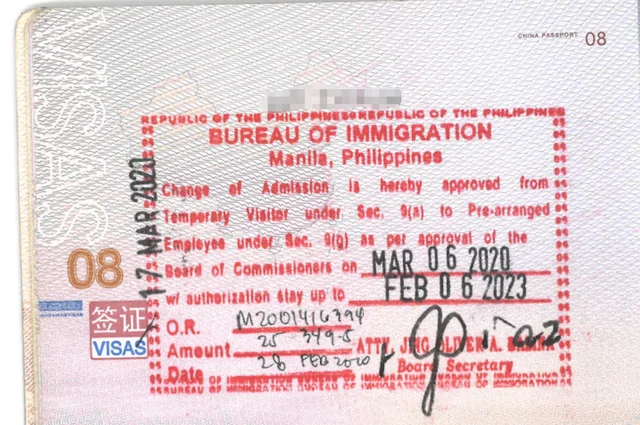
The AEP is closely connected to the 9(g) pre-arranged employment visa. In most cases, the AEP is filed first or at the same time as the 9(g) application, because the labor authorization is a key supporting document for the work visa.
The 9(g) visa is the immigration component that allows the foreign worker to stay and work, while the AEP is the labor authorization that confirms the job is permitted. Both are needed for full compliance in long-term employment cases.
Common Mistakes To Avoid
A common mistake is assuming that a visa alone is enough to work. In reality, many foreign workers need both an immigration visa and a DOLE-issued AEP to be fully compliant.
Other common mistakes include:
- Starting work before the AEP is issued or applied for.
- Filing the AEP under the wrong DOLE office or jurisdiction.
- Submitting an employment contract that does not match the actual role or salary.
- Ignoring the publication requirement or assuming it is optional.
- Forgetting that the AEP is tied to the employer and may need to be amended if the foreign worker changes jobs.
Avoiding these mistakes reduces the risk of penalties, delays, and re-filing.
Final Insights
An alien permit in the Philippines, in the form of an AEP, is required for most foreign nationals who will work in the country. It is issued by DOLE, tied to the employer and the position, and usually processed before or alongside the 9(g) work visa.
How Work Visa Philippines Can Assist
For Work Visa Philippines, the AEP is at the heart of foreign employment compliance. Most work visa cases require a valid AEP, and the AEP often determines whether the foreign worker can legally start employment.
Employers who understand the AEP process can plan better for onboarding, payroll, and immigration timelines. The AEP is not just a form; it is the foundation of the labor authorization that supports the entire work visa case.
Our team helps employers and foreign workers secure the correct AEP and coordinate it with the immigration process so the employment is lawful from day one. If your company is hiring a foreign national or if you are a foreign professional joining a Philippine employer, the AEP should be planned early and filed correctly. Contact us today to schedule an initial consultation:
- Contact Us Here
- Fill Out the Form Below
- Call us at +63 (02) 8540-9623