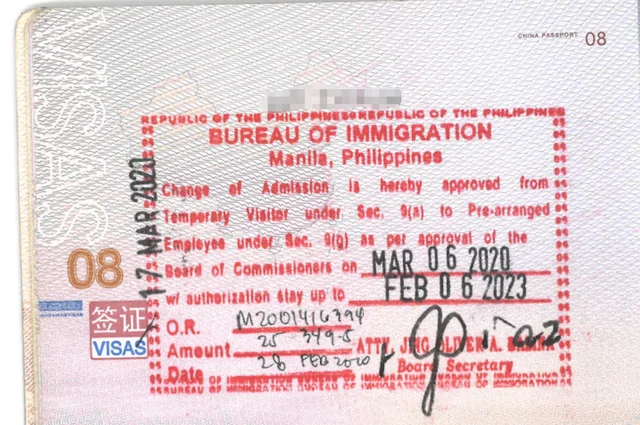
The 9G visa for Japanese nationals is the principal long-term work visa for Japanese professionals who will be employed by a Philippine company or assigned to a qualifying Philippine-based operation. It is also known as the Pre-Arranged Employment Visa and is intended for foreign nationals who will perform lawful work in the Philippines for compensation under a genuine employment relationship.
For Japanese executives, managers, engineers, specialists, and company transferees, the process normally involves both labor and immigration approvals. The Philippine employer must support the application, the foreign worker must meet the documentary requirements, and the application must be handled through the correct Philippine government offices or consular post.
What The 9G Visa Is
The 9G visa is a non-immigrant employment visa for foreign nationals who are coming to the Philippines to engage in a lawful occupation for wages, salary, or another form of compensation. The Bureau of Immigration identifies the 9G as the Pre-Arranged Employment Visa.
The visa is called “pre-arranged” because the employment must be established before the visa is granted. A Japanese national cannot normally apply for this visa without a Philippine employer or a qualifying petitioning entity. The employer’s petition, employment contract, and corporate documents form the foundation of the application.
Why Japanese Nationals Need It
Japanese nationals who will work in the Philippines need a work-authorized immigration status, even if they are entering the country for a business assignment or have a Japanese employer paying their salary. The Philippine Embassy in Tokyo states that foreign nationals who will perform paid work or enter into an employer-employee relationship in the Philippines need the appropriate 9(G) visa category.
This includes a wide range of occupations, including doctors, nurses, professors, engineers, scientists, bankers, and professionals working in commercial, industrial, agricultural, or other business activities. The decisive issue is not only the job title. The actual activities, compensation arrangement, employer relationship, and length of stay must be considered.
Common Japanese 9G Applicants
The 9G visa for Japanese nationals is commonly relevant to professionals assigned to Philippine subsidiaries, branches, representative offices, or other local operations. It can also apply to Japanese employees hired directly by a Philippine company.
Typical applicants may include:
- Japanese executives assigned to manage a Philippine subsidiary.
- Country managers and senior commercial officers.
- Engineers and technical specialists.
- Japanese professionals supporting manufacturing or construction projects.
- Finance, banking, and compliance specialists.
- Researchers, professors, and other qualified professionals.
- Japanese employees transferred to a Philippine branch or affiliate.
The position must be genuine, and the Philippine employer must be able to explain why the foreign worker is needed for the role.
Employer Sponsorship Is Essential
The 9G visa is employer-driven. The Philippine company or institution normally files the petition with the Bureau of Immigration, rather than leaving the Japanese applicant to manage the entire process independently.
The employer must provide documents showing that it is legally operating in the Philippines and that the proposed employment is legitimate. The petition may include corporate registration records, the company’s financial and tax documents, business permits, a recommendation or endorsement letter, and evidence supporting the foreign hire.
This is particularly important for Japanese companies establishing a Philippine presence. The local entity should be properly registered and operational before it attempts to sponsor a foreign employee.
The Alien Employment Permit
The 9G visa process normally works together with an Alien Employment Permit, or AEP, from the Department of Labor and Employment. The AEP is the labor authorization that supports the foreign national’s employment in the Philippines.
The AEP process considers whether a competent, able, and willing person in the Philippines is available to perform the work at the time of application. Under the Philippines’ labor framework, the employer must be prepared to explain the foreign worker’s qualifications and the business need for the position.
A Japanese national should not assume that the 9G visa alone is enough. The immigration application and labor authorization should be planned together.
The Usual Application Routes
Japanese nationals may follow different routes depending on where they are located and how the employer structures the filing. A person in Japan may apply through the Philippine Embassy in Tokyo after the Philippine-side petition and authorization have been completed. A person already in the Philippines may be eligible for a conversion from temporary visitor status to a 9G visa through the Bureau of Immigration, subject to the applicable requirements.
The Philippine Embassy in Tokyo explains that the local employer first applies for the 9(G) visa with the Philippine Bureau of Immigration. After approval, the authorization is transmitted through the Department of Foreign Affairs in Manila to the Embassy, after which the applicant may submit the consular visa application in Tokyo.
Applying From Japan
For a Japanese national applying before traveling to the Philippines, the process begins with the Philippine employer. The employer files the 9G petition in the Philippines and waits for the necessary authorization.
Once the authorization reaches the Philippine Embassy in Tokyo, the Japanese applicant can submit the required visa documents to the Embassy’s Consular Section. This means the applicant should not generally travel to Tokyo expecting to submit a complete 9G application before the Philippine-side authorization exists.
The Embassy’s published procedure provides a useful outline, but applicants should confirm the latest filing instructions, appointment requirements, fees, and document rules directly with the Embassy before submission.
Applying Inside The Philippines
Some Japanese nationals enter the Philippines first as temporary visitors and later receive a job offer or assignment. In suitable cases, the Philippine employer may apply for conversion to a 9G visa through the Bureau of Immigration.
The applicant must maintain lawful immigration status while the petition is processed. A tourist or temporary visitor visa does not itself authorize employment. If the Japanese national needs to begin work before the 9G conversion is approved, the employer may explore a Provisional Work Permit from the Bureau of Immigration, which is issued during the pendency of a pre-arranged employment visa application.
Step-By-Step Process
The 9G visa for Japanese nationals requires coordination between the employee, the Philippine employer, DOLE, the Bureau of Immigration, the Department of Foreign Affairs, and, where applicable, the Philippine Embassy in Tokyo. The sequence below describes the main stages.
Step 1: Confirm The Employment Structure
The first step is to identify the Philippine employer, work location, position, salary, and assignment length. The employer should also determine whether the Japanese national will be locally employed, transferred from a Japanese parent company, or assigned to a Philippine branch or affiliate.
This classification matters because the documents must accurately reflect the relationship. A local employment contract, an intra-company assignment, and a representative-office arrangement may require different supporting evidence even if the employee performs similar duties.
Step 2: Prepare The Employment Contract
The employer prepares the employment contract or assignment documents before filing. The documents should describe the position, duties, compensation, duration, and work location.
The information should be consistent with the AEP and 9G petition. A mismatch between the contract, corporate records, and visa application can lead to requests for clarification or additional documents.
Step 3: File The AEP
The Philippine employer files the AEP application with DOLE when an AEP is required. The employer may need to provide the employment contract, company documents, evidence of the foreign worker’s qualifications, and supporting information about the role.
For Japanese professionals in regulated occupations, additional professional licensing or special permits may be necessary. The Philippines’ commitments concerning Japanese service providers state that foreign professionals practicing regulated professions must comply with the Professional Regulation Commission requirements and obtain the appropriate permit where applicable.
Step 4: File The 9G Petition
After the labor-side requirements are addressed, the employer files the 9G petition with the Bureau of Immigration. The BI’s published process includes securing the appropriate application form, submitting the documents for pre-screening, paying the required fees, attending a hearing, completing image and fingerprint capture for the ACR I-Card, checking the application status, and submitting the passport for visa implementation after approval.
The petition is not approved automatically. BI reviews the employer’s documents, the employment arrangement, and the foreign worker’s eligibility.
Step 5: Complete Consular Processing In Tokyo
If a Japanese national is applying from Japan, the Philippine Embassy in Tokyo receives the visa application after the Philippine side authorization has been transmitted through the proper channels.
The applicant must submit the required documents and comply with the Embassy’s filing and interview procedures. The Embassy may require a personal appearance, and the applicant should not make travel plans based on an assumption that issuance is immediate.
Step 6: Enter The Philippines And Register
After the 9G visa is issued in Japan, the Japanese national travels to the Philippines and completes the required immigration and registration steps. The Tokyo Embassy’s published guidance states that a 9(G) visa holder should report to the Philippine Bureau of Immigration within seven days after entering the Philippines for receipt of the relevant certificate and foreigner registration procedures.
The applicant may also need to complete ACR I-Card procedures, biometric registration, and other BI requirements. These steps should be confirmed with the employer or immigration representative before arrival.
Documents Required In Tokyo
The Philippine Embassy in Tokyo publishes a specific list of documents for the 9(G) visa application. The list includes:
- Original passport and a copy of the passport data page.
- Passport validity of at least six months beyond the intended stay.
- Completed non-immigrant visa application form, FA Form No. 2.
- Passport-size color photograph taken within the required period.
- Visa application or issuance undertaking form.
- Recommendation letter from the Philippine employer or receiving company, notarized in the Philippines.
- Police clearance certificate issued by the relevant Japanese prefectural police headquarters.
- An apostille issued by the Japanese Ministry of Foreign Affairs for police clearance.
- Medical certificate using the prescribed form.
- Chest X-ray and test results where required.
- An apostille issued by the Japanese Ministry of Foreign Affairs for the medical documents.
The Embassy’s checklist is especially important for Japanese applicants because documents issued in Japan may require apostille treatment before they can be accepted for Philippine visa processing. Requirements may change, so applicants should verify the current checklist before obtaining clearances or medical documents.
Police Clearance And Apostille
Japanese applicants should plan carefully for the police certificate and authentication process. The Embassy’s published requirements refer to a criminal record certificate issued by the police headquarters of the relevant prefecture and an apostille from Japan’s Ministry of Foreign Affairs.
An apostille is not the same as a simple photocopy or ordinary translation. The applicant should confirm whether the document must be submitted in original form, whether translation is required, and how long the certificate remains acceptable for the visa application.
Errors in names, dates, passport numbers, or document authentication can create avoidable delays.
Medical Certificate Requirements
The Tokyo Embassy also identifies a prescribed medical certificate as part of the 9G application. The medical package may include a chest X-ray recorded on a CD and laboratory or examination reports, with the documents issued within the required period.
The medical examination should be completed using the correct form and by an appropriate physician or medical facility. Applicants should avoid obtaining the examination too early because medical documents may have a limited period of validity for visa purposes.
Family Members
The 9G framework may cover the spouse and unmarried children under 21 of the principal foreign employee, if they accompany the worker or follow to join within the period allowed under the applicable rules.
Family members generally need their own applications and proof of relationship, such as marriage and birth certificates. Japanese civil-status documents may also need authentication, apostille, translation, or other treatment depending on the filing location and current consular instructions.
The family’s immigration status is connected to the principal employee’s status, so renewals and changes in the principal visa should be planned together.
Validity And Extensions
The length of a 9G visa is connected to the employment arrangement and the approval granted by the Philippine authorities. The Bureau of Immigration’s current service page provides fee tables for one-, two-, and three-year periods, while the underlying rules and case documents control the actual validity issued.
Before the visa and AEP expire, the employer should plan the extension process. Renewal is not automatic, and the employee should maintain the same employer and qualifying role unless the authorities approve the relevant change.
Changing Employers
The 9G visa is tied to the employer and position described in the petition. A Japanese national who resigns, transfers to another company, or changes to a materially different role should not assume that the existing 9G visa can simply be reused.
A new employer may need to file a new AEP and a new 9G petition. Depending on the circumstances, the existing visa may need to be downgraded or canceled before the new employment status can be implemented.
Common Mistakes
Japanese nationals and Philippine employers commonly encounter problems when they:
- Assume a business-visitor or tourist status permits regular work.
- Travel to the Philippines before the employment structure and documents are ready.
- File the 9G application before addressing the AEP requirement.
- Submit police or medical records without the required apostille.
- Use a passport photo or medical document that does not meet the Embassy’s specifications.
- Allow the employee’s temporary status or visa to expire during processing.
- Fail to report to BI after arrival.
- Treat the 9G visa as transferable between employers.
These problems are preventable when the employer and employee prepare the case as one coordinated process.
Final Insights
The 9G visa for Japanese nationals is the primary long-term employment route for Japanese professionals who will work in the Philippines under a pre-arranged employment relationship. The process normally involves Philippine employer sponsorship, AEP compliance, BI approval, and, for applicants in Japan, consular processing through the Philippine Embassy in Tokyo.
Japanese applicants should prepare early, especially when police clearances, apostilles, medical certificates, and employer documents are required. Work Visa Philippines helps Japanese professionals and Philippine employers coordinate the process from employment planning through visa issuance, arrival registration, and future extension.
Reach Out for Expert Assistance
For Work Visa Philippines, the 9G work visa for Japanese nationals is a key service area because Japanese companies frequently assign personnel to Philippine subsidiaries, branches, representative offices, and joint ventures. These cases often involve multiple parties: the Japanese parent company, the Philippine employer, the employee, the Embassy, DOLE, BI, and sometimes professional regulators.
A successful application requires more than filling out a visa form. It requires aligning the employment contract, corporate records, labor permit, consular documents, medical clearance, police certificate, and post-arrival registration. Contact us today for an initial consultation:
- Contact Us Here
- Fill Out the Form Below
- Call us at +63 (02) 8540-9623