A Philippine visa application is not a single standardized process. The requirements, filing location, supporting documents, and government agency involved depend on the applicant’s nationality, purpose of travel, intended length of stay, and planned activities in the Philippines.
A tourist, business visitor, foreign employee, investor, retiree, and family member may each need a different immigration pathway. Choosing the wrong category can cause delays, refused entry, or problems after arrival. The first step in every case is therefore to identify the correct visa before preparing forms or booking travel.
What A Philippine Visa Application Is
A Philippine visa application is a formal request for permission to enter or remain in the Philippines under a specific immigration category. The application is generally submitted to a Philippine Embassy or Consulate, the Bureau of Immigration, or an official electronic visa platform, depending on the visa type and the applicant’s circumstances.
A visa does not automatically guarantee admission at the airport or seaport. It authorizes the applicant to seek entry under the approved conditions, while immigration officers retain authority to assess admissibility at the port of entry. Applicants should therefore ensure that their travel purpose, documents, and answers remain consistent with the visa issued to them.
Choosing The Correct Visa Category
The most important part of a Philippine visa application is selecting a category that matches the applicant’s real purpose. The Bureau of Immigration lists immigrant and non-immigrant categories, including temporary visitor visas, treaty trader or investor visas, pre-arranged employment visas, student visas, and other specialized statuses.
Common categories include:
- Temporary visitor visa for tourism or short business visits.
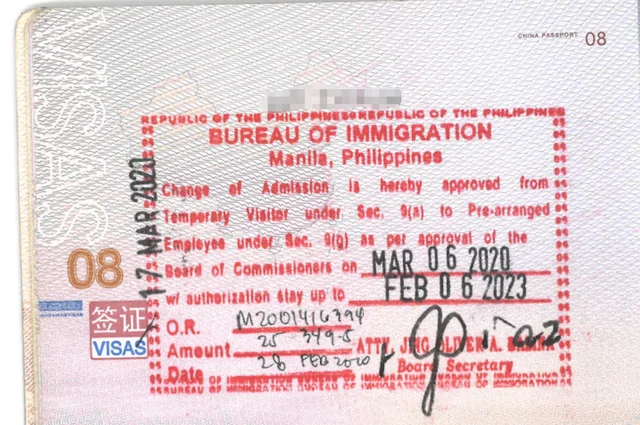
- 9(g) pre-arranged employment visa for foreign nationals working for a Philippine employer.
- 9d Treaty trader or investor visa for qualifying nationals and activities.
- Special investor or resident visas for applicants who satisfy investment or residence conditions.
- Student or special-purpose visas for approved educational or institutional activities.
- Immigrant or permanent-residence categories for eligible applicants.
The correct category depends on what the applicant intends to do, not simply on how long the applicant wants to stay.
Visa-Free Entry And Visa-Required Travel
Some foreign nationals may enter the Philippines without obtaining a visa in advance for a limited period, subject to nationality-based rules and the conditions imposed at entry. Other nationals must obtain a visa before traveling.
Visa-free eligibility does not authorize employment or automatically provide long-term residence. A foreign national who enters visa-free as a visitor must still obtain the correct work authorization before starting employment in the Philippines.
Applicants should confirm the current rules for their passports, as visa-exemption arrangements and permitted stay periods can vary by nationality and may be updated by the Philippine authorities.
Passport Requirements
A valid passport is required for most Philippine visa applications. The official eVisa policy states that the passport or travel document should generally remain valid for at least six months beyond the applicant’s intended period of stay or departure, depending on the relevant rule.
The Philippine Embassy in Washington, D.C., similarly identifies a passport valid for at least six months upon entry as part of its non-immigrant visa requirements. Applicants should also have sufficient blank pages and ensure that the passport is not damaged.
The passport details must match every application form and supporting document. Differences in spelling, dates, middle names, or passport numbers can lead to additional questions.
Basic Documents
Although each visa category has its own checklist, many Philippine visa applications require a core group of documents. These commonly include:
- A completed visa application form.
- Original passport and a copy of the biographical data page.
- Recent passport-size photograph.
- Proof of travel plans or intended stay.
- Proof of accommodation or a Philippine address.
- Evidence of financial capacity when required.
- Return or onward ticket for visitor applications.
- Supporting letter from an employer, sponsor, school, or Philippine organization when applicable.
- Payment of the required visa fee.
The checklist should be reviewed through the official Philippine Embassy, Consulate, Bureau of Immigration, or eVisa portal handling the application. A document accepted by one post may not be processed identically by another.
Applying Through The Official Evisa Portal
For eligible visa-required travelers, the Philippine eVisa portal provides an online application pathway. The official portal describes a process that includes creating an account, completing the application, uploading the required documents, making a payment, and receiving the approved eVisa through the online account or email.
The online process may be more convenient than submitting an initial application entirely on paper, but applicants should not assume that every visa type or nationality is eligible for electronic processing. Some applicants may still be required to provide original documents, appear in person, or follow additional instructions from the relevant Embassy or Consulate.
Step 1: Confirm Eligibility
Before creating an account or downloading a form, confirm whether you need a visa and which category applies to you. This requires reviewing your nationality, current location, travel purpose, planned activities, and intended length of stay.
A visitor who plans to attend meetings may need a different analysis from a foreign national who will perform work, receive Philippine compensation, or enter an employer-employee relationship. An investor, retiree, student, and dependent will also have different requirements.
This first review prevents one of the most common mistakes: filing a complete application under the wrong category.
Step 2: Review The Official Checklist
Once the category is identified, review the official checklist issued by the appropriate authority. For a temporary visitor application, this may include proof of bona fide tourist or business status and a confirmed return or onward ticket.
For employment-based applications, the file may require an employment contract, employer petition, Alien Employment Permit, corporate documents, medical records, police clearances, or additional approvals. For family or resident cases, civil documents proving the relationship may also be required.
Applicants should use the current checklist rather than relying only on old online articles or advice from another applicant.
Step 3: Complete The Form Carefully
The application form should be completed accurately and legibly. Electronic forms must contain information that matches the passport, travel history, intended address, employment details, and supporting documents.
Applicants should not omit previous names, immigration refusals, criminal records, or other information requested by the form. Misrepresentation can cause refusal and may affect future immigration applications.
For online filings, applicants should save the reference number, confirmation email, and copies of every uploaded document.
Step 4: Prepare Supporting Evidence
Supporting documents should explain why the applicant qualifies for the visa. A tourist may provide an itinerary, accommodation details, financial evidence, employment information, and return or onward travel. A business visitor may also need a letter from the sponsoring company or the Philippine host.
An employment applicant should provide evidence of the actual Philippine job and employer. An investor should provide investment records. A student should provide school admission documents. The evidence should tell one consistent story about the applicant’s purpose.
Strong applications are not necessarily the ones with the most documents. They are the ones where each document supports a specific requirement.
Step 5: Submit The Application
The application may be submitted online, by mail, or in person, depending on the relevant post and visa category. Some Embassies require an appointment, while others conduct an initial email or electronic pre-assessment before requesting original documents.
For example, the Philippine Embassy in Germany describes a process that begins with an electronic copy of the signed form and scanned supporting documents for pre-assessment, followed by submission of the passport and hard copies if the Visa Office confirms that the file is complete.
Applicants should follow the instructions of the specific Embassy or Consulate rather than assuming that every Philippine post operates in exactly the same way.
Step 6: Pay The Visa Fee
Visa fees depend on the category, number of entries, nationality, and filing location. Applicants should pay only through the payment method identified by the relevant Philippine authority.
Fees may be non-refundable even if the application is refused or withdrawn. Applicants should therefore confirm the amount and accepted payment method before submitting the application.
A payment receipt should be kept with the application records because the Embassy or Consulate may request it during processing or release.
Step 7: Respond To Additional Requests
The reviewing officer may request additional documents, an interview, a corrected form, or original records. This does not necessarily mean that the application will be refused; it usually means that the officer needs more information before making a decision.
Applicants should respond within the deadline given by the Embassy, Consulate, or immigration office. Delayed responses can cause the application to be closed or require a new submission.
Work Visa Philippines often helps clients organize responses so that the additional documents address the actual concern rather than creating more inconsistencies.
Step 8: Receive The Visa
If approved, the applicant may receive an electronic visa, a visa sticker in the passport, or instructions to collect the passport from the Embassy or Consulate. The form of issuance depends on the application channel and visa category.
The applicant should check the visa immediately after issuance. Confirm the name, passport number, visa category, validity dates, number of entries, and any conditions printed on the document.
An error should be reported before travel rather than discovered at the airport.
Philippine Visa Application For Foreign Workers
Foreign nationals who will work in the Philippines require a different process from ordinary visitors. The most common long-term employment route is the 9(g) pre-arranged employment visa, generally supported by an Alien Employment Permit from the Department of Labor and Employment.
The employer usually files or supports the employment petition. The worker’s employment contract, job description, qualifications, and Philippine company documents must align across the labor and immigration applications.
A visitor visa or visa-free entry does not itself authorize employment. If a foreign national is already in the Philippines as a visitor and later receives a job offer, the employer may explore conversion to the appropriate work status, subject to the applicable requirements.
Tourist And Business Applications
Temporary visitor applications generally focus on the applicant’s short-term purpose, financial capacity, travel plans, and intention to leave the Philippines after the authorized stay. The official eVisa policy identifies a passport, completed form, proof of bona fide tourist or business status, and confirmed return or onward travel among the requirements for visa-required travelers.
A business visitor may attend meetings, conferences, or commercial discussions, but must be careful not to perform employment that requires a work permit. If the planned activities involve productive work for a Philippine entity, a different visa and labor authorization may be necessary.
Applications For Investors
Investor applications require evidence that the applicant meets the relevant investment criteria. This may include investment records, corporate documents, bank evidence, and proof of the applicant’s role or ownership.
The appropriate visa depends on the investment program. A foreign national should not assume that opening a bank account, buying property, or forming a company automatically qualifies for an investor visa. Each program has its own eligible investment categories, minimum amounts, and compliance rules.
Investors should plan immigration and corporate compliance together.
Applications For Dependents
Dependents may need separate applications even when they are accompanying a principal applicant. Spouses and children generally need civil documents proving the relationship, such as marriage and birth certificates.
Documents issued outside the Philippines may require apostille certification, authentication, translation, or another form of legalization. The exact process depends on where the document was issued and where the application is filed.
Family members should apply early enough that their status and travel plans align with the principal applicant’s visa.
Processing Time
Processing time depends on the visa category, nationality, document completeness, filing post, and whether the application requires approval from Philippine authorities in Manila. Some Embassy guidance indicates that complete ordinary applications may take several working days, while cases requiring additional approval may take longer.
Work, investor, resident, and other specialized applications usually take longer than simple visitor applications because they involve more agencies and supporting documents.
Applicants should avoid booking non-refundable travel until the visa has been issued and the passport has been returned.
Common Mistakes
A Philippine visa application can be delayed or refused because of avoidable errors. Common problems include:
- Applying under the wrong visa category.
- Using a passport with insufficient validity.
- Submitting incomplete or inconsistent information.
- Providing documents that are not authenticated or apostilled when required.
- Failing to provide a return or onward ticket for a visitor application.
- Starting work while holding a visitor status.
- Relying on an outdated checklist.
- Waiting until shortly before departure to file.
- Booking travel before visa approval.
- Ignoring follow-up requests from the reviewing authority.
Careful preparation is especially important for applicants who have previously overstayed, been refused entry, or changed immigration status in another country.
Final Perspective
A successful Philippine visa application begins with the correct category. Applicants must match the visa to their actual purpose, prepare a complete and consistent file, follow the instructions of the relevant Philippine authority, and avoid beginning activities that their status does not permit.
For tourists, business visitors, foreign workers, investors, and families, preparation should begin well before travel. Work Visa Philippines helps applicants and sponsors understand the appropriate pathway, coordinate supporting documents, and move through the application process with greater clarity and fewer avoidable delays.
Why Choose Work Visa Philippines
For Work Visa Philippines, a Philippine visa application is not limited to filling out a form. The main value lies in choosing the right legal route, organizing evidence, coordinating employer or investment documents, and maintaining lawful status after approval.
Foreign professionals may need help with 9(g) applications, tourist-to-work conversions, dependent visas, investor visas, or other special categories. Each case requires a different document strategy and timeline. Contact our team for an initial consultation:
- Contact Us Here
- Fill Out the Form Below
- Call us at +63 (02) 8540-9623