A long-stay visa in the Philippines is not a single visa category. It is a practical term for the immigration options that allow foreign nationals to remain in the country beyond a short tourist visit. The right option depends on why the person wants to stay: employment, retirement, investment, marriage to a Filipino citizen, study, remote work, or another lawful purpose.
The central point is that long-term residence should be planned around the applicant’s actual activity. A visitor extension may work for a temporary stay, but it does not authorize local employment. A foreign worker, investor, student, retiree, or spouse may need a more appropriate visa category for a stable and compliant long-term presence.
What A Long-Stay Visa Means
A long-stay visa generally refers to an immigration status that lets a foreign national stay in the Philippines for months, years, or indefinitely, depending on the category. Some long-stay options are technically non-immigrant visas, while others are immigrant, special resident, or investment-based programs.
The category matters because each status has its own eligibility rules, allowed activities, renewal process, dependent options, and compliance obligations. A foreigner should not choose a visa solely because it allows a longer stay; the visa must also match what the person will do in the Philippines.
Why The Right Visa Matters
A foreign national may be able to extend visitor status for a long period, but that does not mean visitor status is the best long-term solution. Visitors cannot use a temporary stay category as a substitute for a work visa, student visa, investor visa, or residence status.
For example, a foreign professional employed by a Philippine company typically needs a 9(g) Pre-Arranged Employment Visa. A student needs a 9(f) Student Visa. A foreigner married to a Filipino citizen may qualify for a 13A immigrant visa. An investor may consider a Special Investor’s Resident Visa, while a retiree may consider an SRRV.
Choosing the correct long-stay visa helps prevent unauthorized work, renewal problems, and unnecessary travel disruptions.
Long-Stay Visitor Visa Extensions
Temporary visitor status is one of the most commonly used routes for foreigners who want to stay in the Philippines for several months without working locally. Visa-exempt travelers and visitors holding a 9(a) Temporary Visitor Visa can apply for extensions through the Bureau of Immigration.
The Long-Stay Visitor Visa Extension, or LSVVE, allows eligible foreign nationals to apply for a six-month extension in one transaction. The Bureau of Immigration’s program allows non-visa-required nationals to stay for a maximum of 36 months and visa-required nationals to stay for a maximum of 24 months, subject to approved extensions.
This option may be suitable for long-term visitors, family visitors, people exploring the country before relocation, and foreigners who do not need local employment authorization. It is not appropriate for a person who will work for a Philippine employer.
9G Pre-Arranged Employment Visa
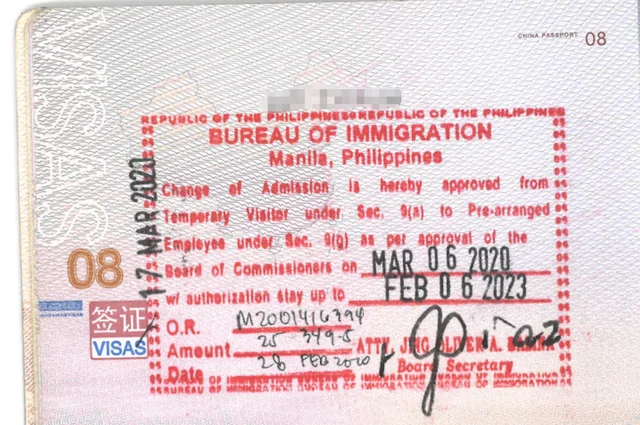
The 9(g) Pre-Arranged Employment Visa is the standard long-stay visa for foreign nationals who will work for a Philippine company. The visa is employer-sponsored and is tied to a genuine job, a specific employer, and a defined position.
In most cases, the employer must also secure an Alien Employment Permit from the Department of Labor and Employment. The AEP is the labor authorization, while the 9(g) visa is the immigration status that allows the foreign worker to live and work in the Philippines.
The 9(g) visa is commonly used by executives, managers, engineers, technical specialists, consultants in employment roles, professors, and other foreign professionals whose expertise is needed by a Philippine employer.
Who Should Use The 9G Visa
The 9(g) visa is usually appropriate for foreign nationals who have:
- A formal job offer from a Philippine company.
- A local employer willing to sponsor the visa.
- A role that requires foreign expertise or specialized skills.
- A work assignment expected to continue beyond a short-term visit.
- An approved or pending Alien Employment Permit, where required.
The visa may be issued for one to three years, depending on the employment contract and approval, and can generally be renewed if the employment relationship continues.
The foreign worker should not begin regular employment while holding only visitor status unless a proper temporary work authorization has been issued.
Provisional Work Permit
A Provisional Work Permit may be available while a 9(g) employment visa application is pending. This can help an employer lawfully bring a foreign employee into active work while the longer-term immigration process is being completed.
The PWP is temporary and limited. It does not replace the final 9(g) visa, and it remains tied to the employer and the pending employment application.
Foreign workers and employers should confirm the current requirements before relying on this option, because the application must be properly coordinated with the 9(g) process.
9F Student Visa
The 9(f) Student Visa is the appropriate long-stay category for foreign nationals who will study at an accredited Philippine college, university, or other approved educational institution.
The student visa is tied to the educational program and the sponsoring school. Applicants generally need a letter of acceptance, academic records, passport documents, financial evidence, and other records required by the school and immigration authorities.
A student visa does not automatically authorize employment. Foreign students who want to work should first determine whether another permit or approval is required.
Special Resident Retiree’s Visa
The Special Resident Retiree’s Visa, or SRRV, is a long-term residence option for qualified foreign retirees and financially qualified applicants. It is issued through the Philippine Retirement Authority and allows approved holders to live in the Philippines on an indefinite basis with multiple-entry privileges.
The SRRV may be attractive to retirees, former Filipino citizens, and individuals who meet the required age, deposit, health, insurance, and other eligibility criteria. The specific deposit amounts and program categories can change, so applicants should confirm the current PRA rules before committing funds.
The SRRV is primarily a residence and retirement program. It should not be treated as automatic authorization to engage in local employment or to practice a regulated profession.
Special Investor’s Resident Visa
The Special Investor’s Resident Visa, or SIRV, is a residence pathway for foreign investors who make and maintain a qualifying investment in the Philippines. Public guidance generally identifies a minimum investment of US$75,000 in eligible Philippine investments as the primary threshold.
The SIRV may be relevant for foreign nationals who want to establish a long-term presence based on investment rather than employment. Applicants must meet personal eligibility requirements, remit funds through the required banking channels, place the funds in eligible investment vehicles, and maintain the investment after approval.
The SIRV is different from a visitor visa and different from a 9(g) work visa. Owning an investment does not automatically authorize the investor to perform employment duties in a Philippine company.
13A Visa By Marriage
A foreign national who is legally married to a Filipino citizen may be eligible for a 13A Non-Quota Immigrant Visa by Marriage. This visa can provide a route to permanent residence, subject to the applicant’s eligibility and ongoing marriage to the Filipino spouse.
The process generally begins with a probationary period before the applicant may qualify for permanent residence, except where different rules apply through treaty arrangements or other special circumstances.
Applicants must provide proof of a valid marriage, the Filipino spouse’s citizenship, joint residence or relationship evidence, police and medical clearances, and other required documents.
13G Visa And Former Filipinos
Former natural-born Filipino citizens who became foreign citizens may have several long-stay options. These may include a 13G visa, reacquisition of Philippine citizenship under Republic Act No. 9225, or the Balikbayan privilege, depending on the person’s facts.
The 13G visa is available for former natural-born Filipinos who were naturalized in a foreign country and wish to return to the Philippines for permanent residence. Dual citizenship under RA 9225 may be a more suitable route for many former Filipinos because it restores Philippine citizenship rather than simply granting a visa.
The Balikbayan privilege may also permit eligible former Filipinos and their qualifying family members to stay visa-free for up to one year.
9D Treaty Trader Or Investor Visa
The 9(d) Treaty Trader or Investor Visa is available to nationals of countries that have a qualifying treaty of commerce, navigation, or friendship with the Philippines. The applicant must be entering into a substantial trade or directly developing an enterprise in which the applicant has invested or is actively investing.
This visa is nationality-specific and business-specific. Not every investor can use it, and holding shares in a Philippine business does not automatically establish eligibility.
Applicants should confirm whether their nationality qualifies and whether the investment and commercial activities meet the treaty requirements.
Special Visa For Employment Generation
The Special Visa for Employment Generation, or SVEG, is an option for foreign investors who create a minimum number of jobs for Filipino workers. The program is intended to reward employment-generating investments and can provide special non-immigrant status to qualified foreign investors.
The qualification criteria are specific. The investor must demonstrate actual job creation, compliance with employment requirements, and continued fulfillment of the program conditions.
This visa is more specialized than the SIRV and may not be suitable for an investor who does not plan to create the required level of local employment.
PEZA And Special Non-Immigrant Visas
Foreign nationals working for companies registered with the Philippine Economic Zone Authority, the Board of Investments, or similar special-status entities may qualify for special non-immigrant visas or 47(a)(2) PEZA visa arrangements.
These visas are tied to the employer’s registration, the foreign employee’s role, and the specific project or investment. They may be useful for employees of export-oriented companies, economic zone enterprises, and businesses covered by special investment laws.
The correct status depends on the company’s incentives, registration documents, and the foreign national’s actual work.
Digital Nomad Visa
The Philippines has authorized a Digital Nomad Visa framework for foreign nationals who work remotely for employers or clients outside the Philippines. The category is intended for remote workers who use digital technology, earn income from abroad, and do not enter the Philippine labor market.
The Digital Nomad Visa is distinct from a 9(g) work visa. It is not for foreign nationals who want to work for a Philippine employer, receive local employment income, or conduct regular local employment activities.
Applicants should confirm the current implementing rules, nationality reciprocity requirements, income documentation, health insurance, and filing procedures before relying on this option.
Choosing Between Long-Stay Options
The correct long-stay visa depends on the applicant’s purpose.
| Situation | Possible Long-Stay Visa Option | Main Consideration |
| You want to stay as a visitor for several months | 9A extension or LSVVE | Does not authorize local employment |
| You have a Philippine employer | 9G Pre-Arranged Employment Visa | Usually requires employer sponsorship and AEP |
| You will study in the Philippines | 9F Student Visa | Requires school acceptance and immigration approval |
| You are married to a Filipino citizen | 13A Immigrant Visa | Requires valid marriage and continuing eligibility |
| You are a qualified retiree | SRRV | Requires compliance with PRA retirement rules |
| You will make a qualifying investment | SIRV or another investor visa | Investment must meet program requirements |
| You are a former natural-born Filipino | 13G, RA 9225, or Balikbayan privilege | Citizenship route may be more suitable |
| You work remotely for a foreign employer or clients | Digital Nomad Visa | Not for Philippine local employment |
| You work for a PEZA or BOI-registered company | 47(a)(2), PEZA visa, or related status | Depends on employer registration and role |
This comparison is a starting point only. Immigration planning should be based on the actual facts, not just a general label.
ACR I-Card And Annual Reporting
Many long-stay visa holders are required to register with the Bureau of Immigration and obtain an Alien Certificate of Registration Identity Card, or ACR I-Card. The card serves as proof of alien registration and is commonly used for immigration transactions, banking, employment records, and other official purposes.
Registered aliens may also be required to complete the Bureau of Immigration’s Annual Report within the prescribed period each year. The Annual Report requirement is separate from visa renewal and ACR I-Card renewal.
Foreign nationals should monitor all three deadlines: visa validity, ACR I-Card validity, and annual reporting.
Common Mistakes
Foreign nationals often make mistakes when planning a long-stay visa. Common problems include:
- Using visitor extensions as a substitute for a work visa.
- Assuming a residence visa automatically authorizes employment.
- Choosing an investor visa without verifying the qualifying investment rules.
- Applying for an SRRV without checking the current PRA requirements.
- Changing employers while holding a 9(g) visa without filing the necessary new applications.
- Failing to renew the AEP before renewing a work visa.
- Ignoring ACR I-Card and Annual Report obligations.
- Using a student visa while performing unauthorized work.
- Assuming a spouse visa is automatic after marriage.
- Failing to plan for dependents before the principal applicant relocates.
These problems can lead to delays, penalties, loss of status, or difficulties with future immigration applications.
Final Insights
The Philippines offers multiple long-stay visa options for foreign nationals, including visitor extensions, 9(g) employment visas, student visas, retirement visas, investor visas, marriage-based immigrant visas, and special programs for former Filipinos, remote workers, and investment-zone employees.
The best long-stay visa is the one that matches the applicant’s real purpose in the country. Visitor extensions may work for temporary residence, but they do not authorize local work. Employment, investment, study, marriage, and retirement each require their own immigration strategy.
Work Visa Philippines helps foreign nationals assess their long-term options, prepare the correct documents, coordinate employer or investment requirements, and maintain compliance after approval.
Work Visa Philippines For Visa-Related Matters
For Work Visa Philippines, a long-stay visa is not just a residence document. It is the legal framework that determines what a foreign national can do while living in the Philippines.
A foreign employee needs employment-based status. An investor needs investment-based status. A student needs an education-based status. A retiree needs a retirement pathway. Matching the visa to the purpose creates a more secure, predictable, and compliant long-term plan. Contact us for an initial consultation:
- Contact Us Here
- Fill Out the Form Below
- Call us at +63 (02) 8540-9623