Working as a foreigner in the Philippines is possible for qualified professionals, executives, technical experts, managers, and other foreign nationals whose skills are needed by a Philippine employer. However, a job offer alone is not enough. Foreign workers must obtain the right labor authorization and immigration status before beginning regular employment.
In most standard employment cases, the foreign national needs an Alien Employment Permit from the Department of Labor and Employment and a 9(g) Pre-Arranged Employment Visa from the Bureau of Immigration. These are separate approvals that must work together for the employee to lawfully live and work in the country.
What Working As A Foreigner Means
Working as a foreigner means performing employment or gainful work in the Philippines as a non-Philippine national. This may involve a local employment contract, an overseas assignment, an intra-company transfer, or employment with a Philippine subsidiary, branch, or representative office.
The legal test is based on the actual work performed, not only on the employee’s nationality, job title, or source of salary. A foreign worker who is paid by an overseas company may still require Philippine work authorization if the person performs work in the Philippines for a local business operation.
Why Foreign Employment Is Regulated
The Philippines regulates foreign employment to protect local workers while allowing companies to hire foreign expertise where there is a genuine business need. DOLE issues an Alien Employment Permit only after determining that no competent, able, and willing Filipino is available at the time of application to perform the service for which the foreign national is being hired.
This does not mean that foreign nationals cannot work in the Philippines. It means that the employer must explain why the foreign employee is needed and show that the position is legitimate, specialized, or otherwise justified.
The Main Legal Requirements
The legal requirements for working as a foreigner usually involve two layers:
- Labor authorization through an Alien Employment Permit, or AEP, issued by DOLE.
- Immigration authorization through an appropriate visa or permit issued by the Bureau of Immigration, commonly the 9(g) Pre-Arranged Employment Visa for long-term employment.
The AEP and 9(g) visa have different purposes. The AEP relates to the foreign national’s authority to take the job, while the visa relates to the person’s right to enter, stay, and work under Philippine immigration rules.
The Alien Employment Permit
The AEP is a permit issued to foreign nationals seeking admission to the Philippines for employment purposes. DOLE issues the permit after considering whether a qualified Filipino worker is available for the role at the time of application.
The employer applies for the AEP through the DOLE Regional Office with jurisdiction over the place where the foreign worker will be employed. The permit is generally employer-specific and position-specific, meaning it cannot simply be moved from one company or job to another.
An AEP is not a visa. It is only one of the requirements for the issuance of a work visa, so the employee must normally complete the immigration process as well.
The 9G Pre-Arranged Employment Visa
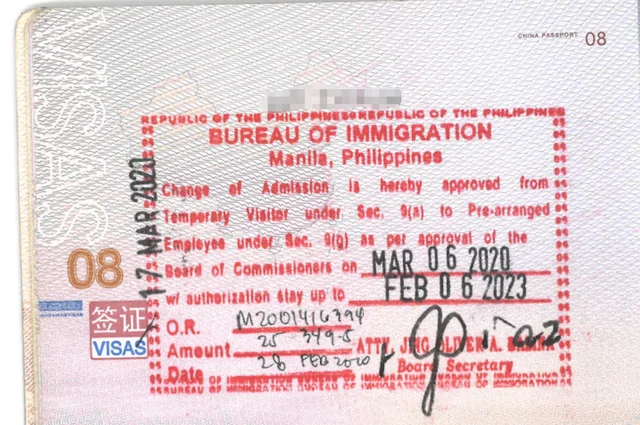
The 9(g) visa is the standard long-term work visa for foreign nationals employed by Philippine companies. It is often called the Pre-Arranged Employment Visa because the job must be arranged in advance and supported by a Philippine employer.
To apply for a 9(g) visa, the foreign worker must have sponsorship from a Philippine-based employer. This means securing employment with a local company is generally a prerequisite, and the employee must usually obtain the AEP before filing the 9(g) application.
The 9(g) visa is tied to the sponsoring employer and approved role. A foreign national who changes employers may need a new AEP and a new 9(g) visa application.
Who Can Be Hired As A Foreign Worker
Foreign workers may be hired when the employer has a real business need, and the applicant has qualifications that justify foreign employment. Common examples include:
- Senior executives and country managers.
- Technical specialists and engineers.
- Information technology professionals.
- Manufacturing and quality-control experts.
- Financial, banking, and compliance specialists.
- Academic personnel and research professionals.
- Project managers and senior consultants.
- Foreign employees assigned to a Philippine subsidiary or branch.
The applicant’s education, experience, certifications, and specialized knowledge should match the requirements of the position. Employers should be prepared to show why the foreign national is particularly qualified.
Role Of The Philippine Employer
The Philippine employer is central to the process. The company normally files the AEP application, supports the 9(g) visa petition, provides corporate documents, and takes responsibility for the employment relationship.
The employer should be legally registered and authorized to operate in the Philippines. A domestic corporation, foreign branch office, or properly registered representative office may serve as a sponsoring employer, subject to the scope of its authorized activities.
The employer must also prepare a clear employment contract, maintain valid permits and tax records, and keep the employee’s role consistent with the information filed with DOLE and the Bureau of Immigration.
Step 1: Secure A Genuine Job Offer
The first step in working as a foreigner is securing a legitimate job offer from a Philippine employer. The job offer should identify the employer, position, salary, responsibilities, work location, and term of employment.
The job should not be created only for visa purposes. DOLE and immigration authorities may review whether the role is genuine, whether the employer is operating legally, and whether the foreign worker’s qualifications match the position.
A clear contract is the foundation for the AEP and 9(g) applications.
Step 2: Check Whether An AEP Is Required
Before filing, the employer should determine whether the foreign national requires an AEP or qualifies for an exemption. Most foreign employees require an AEP, but some categories may qualify for an exemption or Certificate of Exclusion under DOLE rules.
The employer should not assume exemption based solely on the worker’s title, foreign ownership in the company, or source of salary. The specific legal status and actual duties must be reviewed.
If an AEP is required, the employer should begin the process before the intended employment start date.
Step 3: Prepare The AEP Application
The AEP application usually requires documents from both the employee and the employer. Common requirements include:
- Completed AEP application form.
- Valid passport of the foreign worker.
- Employment contract or appointment letter.
- Employer registration documents.
- Business permits.
- Job description.
- Proof of the foreign worker’s qualifications, experience, and certifications.
- Evidence of labor-market testing where required.
- Other documents requested by the relevant DOLE Regional Office.
The employer must ensure that the job title, duties, salary, and work location are consistent throughout the application.
Step 4: Complete The Labor Market Test
The labor-market test is a key part of the AEP process. Its purpose is to determine whether a qualified Filipino worker is available for the role before a foreign national is hired.
The employer may need to advertise the position through required channels and provide evidence that the vacancy was made available to Filipino applicants. Current AEP rules may require postings through government and other public job platforms, as well as additional justification for employing a foreign national.
The company should maintain accurate records of the advertisements, applications received, and reasons the foreign applicant was selected.
Step 5: File The 9G Visa Application
After the AEP is approved or otherwise properly addressed, the employer can file the 9(g) visa application with the Bureau of Immigration. The application typically includes:
- Joint letter request from the employer and employee.
- Consolidated General Application Form.
- Passport copy and current admission information.
- Employment contract.
- SEC registration and Articles of Incorporation or equivalent company documents.
- Mayor’s Permit or PEZA registration, where applicable.
- Latest income tax return and proof of payment.
- Approved AEP.
- Notarized certification of the number of foreign and Filipino employees.
- BI clearance certificate.
- Medical certificate.
The Bureau of Immigration may require personal appearance, hearing attendance, fingerprints, biometric photo capture, and ACR I-Card processing.
Step 6: Apply For A Provisional Work Permit If Needed
A foreign worker should not start regular employment on a tourist visa simply because the AEP or 9(g) application has been submitted. If the employee must begin work while the 9(g) application is still pending, the employer may explore applying for a Provisional Work Permit.
The PWP is a temporary work authorization issued while the 9(g) application is pending. It may allow the foreign employee to work lawfully during the processing period, but it does not replace the final 9(g) visa.
The employer should confirm the current PWP requirements and validity before relying on it.
Step 7: Complete Registration And Tax Requirements
Once the work visa is approved, the foreign worker must complete the required Bureau of Immigration registration process. This commonly includes obtaining an ACR I-Card, which serves as official identification for registered foreign nationals in the Philippines.
The employee may also need a Philippine Tax Identification Number and must be properly included in payroll, withholding, social security, health insurance, and other employer compliance systems, depending on the work arrangement.
Immigration compliance and tax compliance should be planned together. A valid work visa does not remove tax or payroll obligations.
Short-Term Work Assignments
Not every assignment requires the same long-term 9(g) route. A short-term project, technical service, consultancy, or temporary engagement may require a Special Work Permit or another appropriate temporary authorization.
The correct route depends on the actual duration, work activities, and employer relationship. Employers should not choose a temporary permit merely because it is faster if the assignment is actually long-term and employment-based.
A foreign worker should obtain advice before beginning any paid activity in the Philippines.
Regulated Professions
Some jobs require more than an AEP and a work visa. Foreign nationals in regulated professions may also need a license, special temporary permit, recognition of qualifications, or approval from the Professional Regulation Commission or another regulator.
This can apply to occupations such as medicine, nursing, engineering, law, architecture, teaching, accounting, and other licensed fields.
A 9(g) visa allows immigration status for employment, but it does not automatically authorize the person to practice a regulated profession.
Changing Employers
A foreign worker’s AEP and 9(g) visa are tied to the sponsoring employer and specific position. If the employee resigns, transfers to another company, or is reassigned to a materially different role, the existing approvals may no longer be sufficient.
The new employer may need to obtain a new AEP and file a new 9(g) visa application. The old visa may need to be downgraded, canceled, or otherwise adjusted before the new employment can begin.
Foreign workers should not assume that they can continue working after changing employers without updating their legal status.
Renewals And Ongoing Compliance
Working as a foreigner requires ongoing compliance, not just initial approval. Employers and employees must monitor the expiration dates of the AEP, 9(g) visa, passport, and ACR I-Card.
Renewal should begin early enough to avoid a gap in work authorization. The employer should also report or address material changes in the employee’s job title, duties, location, compensation, or employment status.
Foreign workers may also have annual reporting obligations with the Bureau of Immigration.
Common Mistakes
Foreign workers and employers commonly make mistakes such as:
- Starting work while holding only a tourist visa.
- Assuming a signed contract is enough to authorize employment.
- Treating the AEP as a complete work visa.
- Filing the 9(g) visa without properly addressing the AEP.
- Using inconsistent job titles or duties in different documents.
- Ignoring labor-market test requirements.
- Assuming foreign payroll removes the need for Philippine authorization.
- Failing to obtain licensing for regulated professions.
- Letting the visa, AEP, or ACR I-Card expire.
- Changing employers without applying for a new work authorization.
These mistakes can lead to delays, penalties, work interruptions, or immigration issues for both the employer and employee.
Key Takeaways
Working as a foreigner in the Philippines requires more than a job offer. In most cases, the foreign national needs an Alien Employment Permit from DOLE and a 9(g) Pre-Arranged Employment Visa from the Bureau of Immigration before beginning regular work.
The employer must sponsor the process, demonstrate the need for the foreign role, prepare complete documents, and maintain compliance throughout the assignment. Foreign workers must keep their visa, AEP, ACR I-Card, and tax obligations in order.
Work Visa Philippines helps foreign professionals and Philippine employers manage the process from job offer and AEP filing through 9(g) visa approval, registration, renewal, and employment changes.
Why Turn To Work Visa Philippines
For Work Visa Philippines, working as a foreigner is not limited to obtaining one document. It requires coordinated planning across employment, labor permits, immigration status, tax registration, and long-term compliance.
The best results come from starting early. Employers can define the role properly, complete the labor market requirements, prepare accurate documents, and sponsor the correct visa. Foreign workers can avoid unauthorized employment and protect their ability to live and work in the Philippines legally. Contact our team for an initial consultation:
- Contact Us Here
- Fill Out the Form Below
- Call us at +63 (02) 8540-9623