Foreign nationals who want to work in the Philippines must secure the proper work authorization before starting their jobs. The country has several work visa types and permits for different employment situations. Some are for regular employees hired by Philippine companies. Others apply to foreign workers assigned to special projects, employees of certain international companies, or people who need temporary work permission while waiting for a visa decision.
Choosing the correct category is important. A visa that allows a foreign national to live in the Philippines does not always give that person the right to work. Likewise, a work permit issued by the Department of Labor and Employment (DOLE) is not the same as an immigration visa issued by the Bureau of Immigration (BI).
Employers must understand these differences before hiring or transferring foreign staff. Foreign employees should also check their visa conditions before accepting a job or changing employers. This guide explains the main work visa types in the Philippines, who may qualify, and what employers need to consider.
What Are the Main Work Visa Types in the Philippines?
The Philippines has several visa and permit categories that may apply to foreign nationals who plan to work in the country. The correct option depends on the person’s job, employer, and reason for staying in the Philippines.
The main categories include:
- 9(g) Pre-Arranged Employment Visa: For foreign nationals with employment arranged with a Philippine employer.
- 47(a)(2) Special Non-Immigrant Visa: For qualified foreign nationals covered by specific government arrangements, projects, or legal provisions.
- Special Work Permit (SWP): For certain temporary work activities that do not require a regular employment visa.
- Provisional Work Permit (PWP): For eligible foreign nationals who need permission to work while their 9(g) application is being processed.
- Special Visa for Employment Generation (SVEG): For qualified foreign nationals who establish or operate a lawful business that actually employs at least ten Filipinos.
- Special Investor’s Resident Visa (SIRV): An investment-based residence visa. It is not automatically a work visa, and separate work authorization may be needed.
Other visa categories, such as the Treaty Trader or Treaty Investor Visa under Section 9(d), may also be relevant to certain business and employment arrangements. However, not every visa that allows a foreign national to stay in the Philippines gives the holder permission to work.
9(g) Pre-Arranged Employment Visa
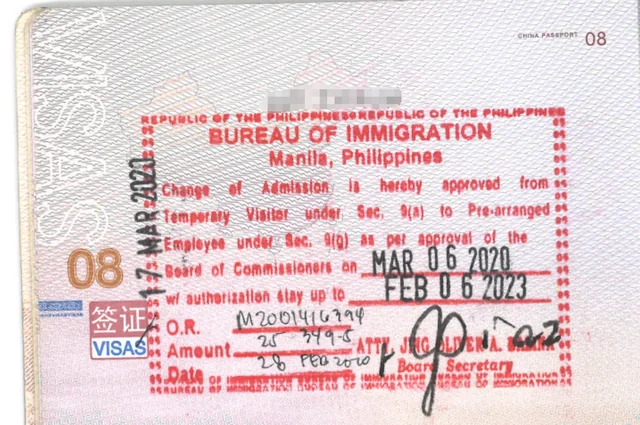
The 9(g) visa is the main employment visa for many foreign nationals hired by Philippine companies. It is intended for people who have arranged lawful employment with an employer in the Philippines.
A Philippine employer or company must normally act as the petitioning party. The foreign employee cannot simply apply for a 9(g) visa based on a plan to look for work after arriving in the country.
The Bureau of Immigration considers whether the employment arrangement meets the requirements for this visa. The employer must provide supporting company and employment documents, while the foreign worker must submit personal records and other required papers.
Who may qualify?
A foreign national may be considered for a 9(g) visa if the person:
- Has a genuine job offer or employment arrangement with a Philippine-based company.
- Will perform lawful work in the Philippines.
- Has the qualifications and experience needed for the position.
- Meets the immigration requirements for the visa.
- Has an employer willing and qualified to file the required petition.
The employer should also check whether the position requires an Alien Employment Permit (AEP) from DOLE or qualifies for an exemption or exclusion.
Important employer responsibility
A 9(g) visa is connected to the approved employment arrangement. A foreign employee should not assume that the visa allows them to work for any company in the Philippines. A change in employer, position, or other important employment terms may require action with DOLE and the Bureau of Immigration.
Employers should review these requirements before transferring a foreign employee or changing the person’s role.
47(a)(2) Special Non-Immigrant Visa
The 47(a)(2) visa is a special non-immigrant category under Philippine immigration law. It applies to foreign nationals who fall within specific legal or government-approved arrangements. It is not a general work visa that every foreign employee can apply for.
This category may cover foreign personnel connected with certain government-authorized projects, programs, or arrangements. The legal basis and the government agency involved determine whether the foreign national may qualify.
Some special non-immigrant arrangements also apply to employees of qualified regional headquarters, regional operating headquarters, and other entities covered by specific laws. For example, Republic Act No. 8756 provides special visa treatment for qualified foreign personnel of regional or area headquarters and regional operating headquarters of multinational companies.
Who may qualify?
Eligibility depends on the specific legal basis for the application. The foreign national may need to show that:
- The employer or project falls under a law or government-approved arrangement.
- The position is covered by the applicable visa rules.
- The required government agency has issued the necessary endorsement or approval, when applicable.
- The applicant has the documents required by the Bureau of Immigration.
Employers should not assume that simply operating a multinational company or having a regional office is enough. They must confirm that the company and employee meet the conditions of the applicable special visa program.
Special Work Permit (SWP)
The Special Work Permit is used for certain temporary work activities in the Philippines. It may apply to foreign nationals who need to perform short-term work but do not need a regular 9(g) employment visa for the activity.
The SWP is issued through the Bureau of Immigration. It is not the same as a 9(g) visa, and it should not be treated as a general solution for long-term employment.
When may an SWP be appropriate?
Depending on the facts and current BI rules, it may be considered for temporary assignments such as:
- Short-term technical or professional services.
- Temporary project work.
- Certain activities involving foreign specialists.
- Other limited work arrangements accepted by the Bureau of Immigration.
The exact requirements depend on the nature and duration of the work. Employers should check the current BI checklist rather than rely on a general statement that every assignment below a certain number of months qualifies.
An SWP also does not remove the need to check other legal requirements. A foreign national may need additional approval from another government agency if the work involves a regulated profession or a special industry.
What employers should remember
The SWP is intended for limited work situations. If the foreign national will take on a continuing role with a Philippine company, the employer should assess whether a 9(g) visa and the required labor permit are more appropriate.
Provisional Work Permit (PWP)
A Provisional Work Permit allows an eligible foreign national to work while the application for a 9(g) Pre-Arranged Employment Visa is pending, subject to the conditions set by the Bureau of Immigration.
This permit is useful in cases where the employer needs the employee to begin work before the main employment visa application has been completed. However, the employer must first confirm that the worker qualifies and that the required application has been properly filed.
The PWP is not a replacement for the 9(g) visa. It is a temporary authorization connected to the pending employment visa process.
What should employers check?
Before relying on a PWP, employers should:
- Confirm that the foreign worker has a valid basis for the 9(g) application.
- Check the current BI requirements for the provisional permit.
- Make sure the employee’s immigration status is valid.
- Review any separate DOLE permit requirements.
- Monitor the PWP’s validity and the status of the main visa application.
Employers should not assume that filing a 9(g) application automatically allows the foreign employee to work. The required provisional authorization must be secured where applicable.
Special Visa for Employment Generation (SVEG)
The Special Visa for Employment Generation is a special visa program for qualified foreign nationals who create employment in the Philippines. It is based on Executive Order No. 758.
Under the program, a qualified foreign national must actually employ at least ten Filipino workers in a lawful and sustainable enterprise, trade, or industry. The requirement is not met simply by registering a company or stating an intention to hire Filipino workers in the future.
The Bureau of Immigration evaluates the application based on the program’s requirements and supporting documents.
Who may qualify?
A foreign national may be considered if the person:
- Owns or operates a lawful and sustainable business in the Philippines.
- Actually employs at least ten Filipinos.
- Can provide evidence of the business and its employment activities.
- Meets the other requirements under the SVEG rules.
The SVEG may also extend certain privileges to the qualified applicant’s spouse and eligible unmarried children, subject to the applicable rules.
Foreign business owners should understand that the SVEG has specific conditions. It is not a general investor visa, and merely holding shares in a Philippine corporation does not automatically qualify someone for this category.
Special Investor’s Resident Visa (SIRV)
The Special Investor’s Resident Visa (SIRV) is a visa for foreign nationals who invest in the Philippines. It is handled by the Board of Investments (BOI) and is available to those who meet the requirements and maintain a qualified investment in the country.
The SIRV allows the holder to reside in the country under the program’s conditions. However, it should not be confused with a regular employment visa.
A foreign national who holds an SIRV and wants to take up a job in a Philippine company must still check the applicable labor and immigration rules. Having an investment-based residence visa does not automatically remove the need for an AEP or other work authorization.
What should investors check?
Before taking an active role in a Philippine company, an SIRV holder should check:
- Whether the planned work counts as employment for which they will be paid.
- Whether they need an Alien Employment Permit (AEP) or qualify for an exemption.
- Whether additional immigration approval is needed.
- Whether the proposed activity is allowed under the conditions of the SIRV.
This distinction is important for foreign investors who also want to manage daily business operations. Owning a company and working as its employee or manager are not always treated the same way under Philippine rules.
Is an Alien Employment Permit Required for Every Work Visa?
No. The Alien Employment Permit is a labor authorization issued by DOLE, while a work visa is an immigration document handled by the Bureau of Immigration. The two serve different purposes, and the need for an AEP depends on the foreign national’s work and legal status.
Under Article 40 of the Labor Code, foreign nationals seeking employment in the Philippines generally need an employment permit, subject to applicable exemptions and exclusions.
DOLE reviews whether the foreign national may be employed in the position and whether a Filipino worker is available who is competent, able, and willing to perform the work.
Some foreign nationals may qualify for an exemption or exclusion under the rules. These may include certain diplomatic personnel, employees of international organizations, and other groups covered by law or regulation. The specific basis must be checked before the employer decides that no AEP is needed.
Employers should also remember that holding a special visa does not always mean the worker is exempt from the AEP requirement. DOLE has clarified that some holders of SIRV, SRRV, 9(d), and 47(a)(2) visas may still need an AEP when they engage in employment.
How Do Employers Choose the Correct Work Visa?
Choosing the right visa starts with understanding what the foreign national will actually do in the Philippines. The employer should not select a category based only on the employee’s nationality or the length of the planned stay.
A practical review should cover these points:
- Identify the purpose of the assignment.
Determine whether the person will take a regular job, provide short-term services, work on a special government project, or manage an investment.
- Review the employer’s legal status.
Check whether the company is properly registered and has the approvals needed to hire foreign personnel. Some special visa categories require a specific type of company or government endorsement.
- Check the duration of the work.
A short assignment may be considered for an SWP, while regular employment may require a 9(g) visa. The length of the assignment alone does not decide eligibility.
- Review the AEP requirement.
Confirm whether the employee needs an AEP or qualifies for an exemption or exclusion under current DOLE rules.
- Check the immigration process.
Review the current BI requirements for the selected visa or permit. Make sure the employee’s existing immigration status allows the planned application.
- Track renewals and changes.
Employers should monitor permit and visa expiry dates. They should also review the effect of any change in employer, job duties, or work location before putting the change into effect.
What Documents Are Commonly Needed for a Philippine Work Visa?
The required documents depend on the visa category and the applicant’s situation. Still, employers and foreign workers should expect to prepare both company records and personal documents.
Common documents may include:
- Valid passport and immigration records.
- Employment contract or job offer.
- Job description and details of the position.
- Company registration documents.
- Current business permits and other company records.
- AEP or proof of an applicable exemption or exclusion, when required.
- Supporting qualifications, licenses, or experience records.
- Government endorsements or approvals for special visa categories.
The Bureau of Immigration or DOLE may request additional documents. Applicants should use the latest official checklist because requirements and procedures can change.
Final Insights
The Philippines offers several work visa types for foreign nationals. However, each category serves a different purpose. The 9(g) visa is commonly used for regular employment, while the 47(a)(2) visa applies to specific legal and government-approved arrangements. The SWP covers certain temporary work activities, and the PWP may allow eligible applicants to work while a 9(g) application is pending.
Other programs, such as the SVEG and SIRV, apply to foreign nationals who meet investment or employment-generation conditions. They should not be treated as automatic substitutes for a work visa or labor permit.
Is Assistance Available?
Yes. Work Visa Philippines assists foreign nationals and Philippine employers with work visa options and permit requirements. Whether a company plans to hire a foreign worker, transfer an existing employee, or check a worker’s current visa, proper planning can help prevent mistakes and delays.
Reach out to our team of experts:
- Contact Us Here
- Fill Out the Form Below
- Call us at +63 (02) 8540-9623