To start a business in the Philippines as an expat, you must address more than company registration. Foreign entrepreneurs need to confirm that their proposed activity is open to foreign participation, select the correct business structure, meet applicable capital requirements, obtain national and local permits, and secure the right immigration status for their own activities.
This distinction is especially important. A foreign national may own or invest in a Philippine business, but ownership alone does not automatically authorize the person to work in or manage that business. Business registration and immigration compliance are separate parts of the process.
Can An Expat Start A Business?
Foreign nationals can establish or invest in Philippine businesses, subject to the Foreign Investments Act, the Foreign Investment Negative List, the Constitution, and sector-specific laws. The Foreign Investments Act generally allows a non-Philippine national to do business or invest in a domestic enterprise up to 100 percent of capital unless another law prohibits or limits foreign participation.
This means foreign ownership is possible in many industries, but it is not unlimited. Some activities are reserved for Filipinos, some permit only a specific percentage of foreign equity, and others are open to full foreign ownership if the enterprise satisfies the applicable rules.
The first step is therefore not filing with the Securities and Exchange Commission. It is checking whether the proposed business activity can legally accept the intended level of foreign ownership.
Foreign Ownership Rules
Foreign ownership depends on the industry, customer base, business activity, and applicable laws. A foreign-owned company that provides export services may be treated differently from a company selling goods directly in the Philippine domestic market.
The current Foreign Investment Negative List should be checked together with special laws governing retail, public utilities, mass media, education, land ownership, professional services, and other regulated sectors. A business that appears open under general rules may still be restricted by a sector-specific statute.
Foreign entrepreneurs should avoid relying on a general statement such as “foreigners can own 100 percent.” The correct question is whether the specific proposed activity allows the intended ownership structure.
Domestic Market And Export Enterprises
The difference between a domestic market enterprise and an export enterprise can affect ownership and capital requirements. A domestic market enterprise primarily serves customers in the Philippines, while an export enterprise generally derives a substantial portion of its sales from outside the country.
A foreign-owned domestic market enterprise may be subject to a minimum paid-in capital requirement, commonly identified as US$200,000 under the Foreign Investments Act framework, with possible reductions in specific circumstances such as advanced technology or employment of Filipino workers.
Export-oriented businesses may qualify for different treatment, but the classification should be supported by the actual business model and documentary evidence. An online business is not automatically an export enterprise simply because its owners live abroad.
Choosing The Business Structure
The business structure affects ownership, liability, registration, tax treatment, capital, and immigration planning. Foreign entrepreneurs commonly consider a domestic corporation, one-person corporation, branch office, representative office, or partnership, depending on the activity.
The right structure should be selected after reviewing the business purpose and the foreign national’s role. It is risky to choose a structure only because it appears cheaper or faster to register.
Domestic Corporation
A domestic corporation is a separate legal entity incorporated in the Philippines. It may be wholly Filipino-owned, partially foreign-owned, or wholly foreign-owned if the activity and applicable requirements allow it.
This structure is often considered by expats who want a Philippine company that can hire employees, sign contracts, maintain local operations, and apply for permits in its own name.
One-Person Corporation
A one-person corporation may be useful for an individual entrepreneur who wants a corporate structure without multiple shareholders. However, foreign participation and capitalization rules still apply.
A one-person corporation is not a way to avoid nationality restrictions. The business activity must still be checked under the Constitution, Foreign Investments Act, Foreign Investment Negative List, and sector-specific laws.
Branch Office
A branch office is an extension of a foreign corporation rather than a separate local company. It may be appropriate when the foreign parent wants to conduct business in the Philippines under its existing corporate identity.
The branch structure normally requires proof of the foreign parent’s legal existence, authorization to establish the branch, designated local representatives, and inward remittance or capitalization documentation under the applicable rules.
Representative Office
A representative office is generally limited to non-revenue-generating activities such as information dissemination, promotion, liaison, and quality control. It is not normally used to conduct ordinary profit-generating operations in the Philippines.
An expat who plans to sign sales contracts, invoice Philippine customers, or perform revenue-generating activities should not assume that a representative office is suitable.
Registering The Business
Once the structure and ownership rules are confirmed, the entrepreneur can begin the business registration process. The Department of Trade and Industry explains that agencies involved may include the DTI, SEC, BIR, local government unit, and other offices, depending on the business type.
Sole proprietorship business names are registered with the DTI, while corporations, partnerships, branches, and representative offices are generally registered with the SEC. DTI registration provides a sole proprietorship with a legal identity for its business name, but it does not replace tax and local permit registration.
Foreign entrepreneurs should also verify whether they are eligible to register as sole proprietors. In many cases, a corporate structure is more appropriate for a foreign national who needs to satisfy ownership and immigration requirements.
Step 1: Confirm The Industry
The first practical step is identifying the exact business activity. The description should be specific enough to determine whether the sector is restricted, regulated, or open to foreign ownership.
For example, “consulting” may cover different activities depending on whether the company provides management consulting, professional services, engineering services, recruitment, financial advice, or technical outsourcing. Each may have different rules.
A written business description should be prepared before company registration.
Step 2: Check Ownership And Capital
After defining the activity, determine how much foreign equity is allowed and how much capital is required. The entrepreneur should also identify whether reduced capitalization may apply because of advanced technology, startup status, employment generation, or export activity.
Capital rules are not always the same for every foreign-owned business. Retail, regulated industries, and businesses subject to special laws may have higher or additional requirements.
The capital should be planned realistically. It may need to support not only the legal minimum but also office expenses, staffing, permits, professional fees, and operating costs.
Step 3: Reserve The Company Name
Once the structure is selected, the entrepreneur reserves or verifies the business name with the appropriate agency. Corporations and partnerships generally proceed through the SEC, while sole proprietorship business names are handled by the DTI.
The proposed name should not infringe on an existing registered name or imply an activity that the business is not authorized to conduct.
Name registration does not itself create full authority to operate. It is only one stage in the overall registration process.
Step 4: Prepare The Incorporation Documents
For a corporation, the founders prepare the Articles of Incorporation, by-laws where applicable, treasurer’s documents, shareholder information, and details of directors and officers.
Foreign shareholders may need to provide passport copies, proof of address, corporate documents, beneficial ownership information, and authenticated records if a shareholder is a foreign company.
The documents should accurately show the ownership structure. Nominee arrangements or paper shareholders created only to evade nationality restrictions can create serious legal risk.
Step 5: Register With The SEC Or DTI
The completed documents are filed with the SEC for corporations, partnerships, branches, and representative offices. Sole proprietorship business names are filed with the DTI.
The SEC also provides online registration channels, including its company registration system, while DTI offers online business-name registration through its Business Name Registration System.
The registration certificate confirms the entity’s legal registration, but the business may still need tax registration, local permits, industry licenses, and immigration authorization for foreign personnel.
Step 6: Register With The BIR
After entity registration, the business must register with the Bureau of Internal Revenue. Tax registration commonly involves obtaining a Tax Identification Number, registering books of accounts, securing authority for invoices or receipts, and complying with filing and withholding obligations.
The exact tax requirements depend on the business structure, income sources, employees, and transactions.
A foreign entrepreneur should not assume that incorporating the company automatically completes tax registration. BIR compliance is a separate and continuing obligation.
Step 7: Secure Local Permits
The business must obtain the necessary permits from the local government unit where it operates. This may include a barangay clearance, mayor’s or business permit, zoning clearance, occupancy documents, fire safety clearance, and other location-based permits.
The local requirements vary by city or municipality. An office in Metro Manila may face different procedures from a business operating in Cebu, Davao, or another locality.
A business should not begin operations before obtaining the permits required for its activity and location.
Step 8: Obtain Industry Licenses
Certain businesses require additional approval from national regulators. Examples may include financial services, recruitment, education, healthcare, food, transportation, construction, telecommunications, and other regulated activities.
A company’s SEC registration does not automatically authorize it to perform a regulated activity.
The entrepreneur should identify all secondary licenses before signing leases, hiring staff, or marketing services to the public.
Hiring Employees
Foreign entrepreneurs who start a business in the Philippines may want to hire Filipino and foreign employees. Filipino employees require ordinary labor, payroll, social security, health insurance, and housing fund compliance.
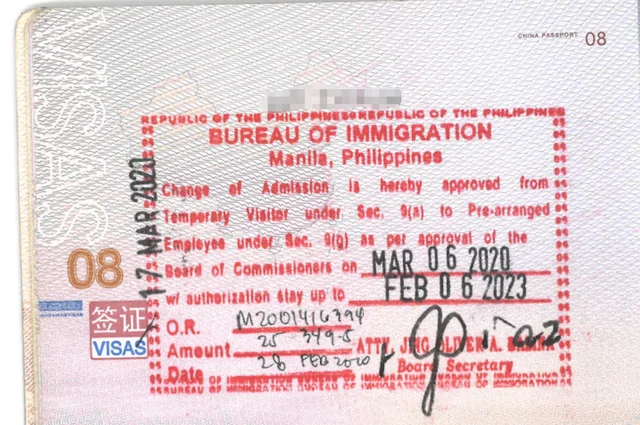
Foreign employees generally require an Alien Employment Permit and an appropriate immigration status. The standard long-term route is often the 9(g) Pre-Arranged Employment Visa, subject to the role and applicable rules.
The company should not hire foreign nationals informally or allow them to start work while holding only a tourist or visitor status.
Can The Owner Work In The Business?
Owning a Philippine business and working in that business are separate issues. A foreign owner may be permitted to hold shares, but that does not automatically authorize the person to manage daily operations, perform services, sign as an employee, or receive compensation for work in the Philippines.
The correct immigration status depends on the owner’s actual role. If the foreign owner will work for the company, the person may need an employment-based visa, investor-related status, or another appropriate authorization.
Work Visa Philippines can help assess the relationship between ownership, directorship, management, and employment.
Business Visa And Work Visa Differences
A business visitor may attend meetings, negotiate contracts, or explore commercial opportunities, but business-visitor status does not automatically authorize regular employment or productive work for a Philippine entity.
A work visa is required when a foreign national will perform employment duties in the Philippines. An investor or resident visa may address residence or investment, but it does not necessarily replace professional licensing or work authorization.
The visa must match the activity actually performed.
Immigration Options For Foreign Entrepreneurs
Foreign entrepreneurs may consider different immigration options depending on their business and personal role. These can include:
- 9(g) Pre-Arranged Employment Visa for employment with a Philippine company.
- Investor-related visas for qualifying investment activities.
- Special Investor’s Resident Visa for applicants who meet the investment program rules.
- Startup-related immigration options for qualifying ventures.
- Temporary visitor status for limited business activities without local employment.
No single visa is suitable for every foreign business owner. The appropriate option depends on ownership, daily duties, salary, investment, nationality, and length of stay.
Tax And Financial Planning
Starting a business in the Philippines also requires financial planning. The company may have corporate income tax, value-added tax, or percentage tax, withholding, payroll, invoicing, and reporting obligations, depending on the business.
The foreign owner may also have tax considerations in their home country. A US, Australian, Japanese, or European entrepreneur should obtain advice on cross-border taxation before moving funds or receiving income from the Philippine company.
Immigration status and tax residence are related but separate issues. A residence visa does not automatically determine tax residence, and company registration does not resolve personal tax questions.
Common Mistakes
Foreign entrepreneurs commonly encounter problems when they:
- Assume every business can be 100 percent foreign-owned.
- Choose a business structure before checking the industry restrictions.
- Use a Filipino shareholder only as a nominal figurehead.
- Treat SEC registration as a full operating authorization.
- Start operations without local permits.
- Hire foreign workers without AEP and work authorization.
- Assume ownership gives the foreigner permission to work.
- Ignore BIR registration and ongoing tax filings.
- Underestimate capitalization and operating costs.
- Fail to check industry-specific licenses.
These mistakes can cause registration problems, penalties, disputes among shareholders, and immigration issues.
Final Thoughts
Foreign nationals can start businesses in the Philippines, but the process begins with checking foreign ownership rules and choosing the correct structure. After that, the entrepreneur must complete SEC or DTI registration, tax registration, local permits, industry licenses, and employer compliance, where applicable.
A foreign owner must also remember that owning shares is not the same as having permission to work in the company. If the expat will manage, operate, or provide services in the Philippines, the correct immigration and work authorization should be planned separately.
Work Visa Philippines helps foreign entrepreneurs coordinate business formation and immigration planning so they can establish Philippine operations with a clearer and more compliant path.
Why Choose Work Visa Philippines
For Work Visa Philippines, helping a foreign national start a business in the Philippines as an expat requires coordination between corporate registration and immigration planning. A founder may need to establish a company, hire workers, manage operations, and maintain a lawful personal status at the same time.
The company’s ownership structure should support the intended visa strategy, while the foreign founder’s actual duties should match the authority granted by the chosen immigration status. Contact us today for an initial consultation:
- Contact Us Here
- Fill Out the Form Below
- Call us at +63 (02) 8540-9623