The employment of foreign workers in the Philippines is allowed, but it is regulated to protect local employment while allowing businesses to bring in genuinely needed foreign expertise. Employers must usually establish that the role cannot be filled by a qualified Filipino worker, secure an Alien Employment Permit from the Department of Labor and Employment, and support the foreign national’s appropriate immigration status before regular work begins.
For Work Visa Philippines, this subject is central because foreign hiring involves two connected systems: labor authorization from DOLE and immigration authorization from the Bureau of Immigration. A company that obtains only one of these approvals may still be non-compliant, even if the foreign employee has a signed contract and is already physically present in the Philippines.
What Employment Of Foreign Workers Means
Employment of foreign workers refers to a Philippine employer engaging a non-Philippine national to perform work in the country for compensation. The Omnibus Rules Implementing the Labor Code apply to all aliens employed or seeking employment in the Philippines and to their present or prospective employers.
The concept is broader than simply hiring someone on a local payroll. A foreign national may still need work authorization when assigned by an overseas parent company, paid from abroad, or sent to work for a Philippine affiliate. The real question is whether the person will perform gainful work in the Philippines under an employment or similar working arrangement.
Why The Philippines Regulates Foreign Employment
Philippine labor policy promotes the preferential use of Filipino labor while recognizing that companies may need foreign knowledge, technical expertise, executive experience, or specialized skills. The Alien Employment Permit system is designed to ensure that foreign workers complement the local workforce rather than displace qualified Filipino workers.
The government’s position is not that foreigners cannot work in the Philippines. Rather, foreign employment must be justified, documented, and properly authorized. Employers must demonstrate the business need for the foreign hire and comply with the labor-market rules that apply to the role.
The Legal Framework
The legal framework for the employment of foreign workers includes the Labor Code, its implementing rules, DOLE regulations governing Alien Employment Permits, immigration laws, and sector-specific rules.
Article 40 of the Labor Code provides the basic rule that an alien seeking admission to the Philippines for employment purposes must obtain an employment permit from the Secretary of Labor and Employment or an authorized representative.
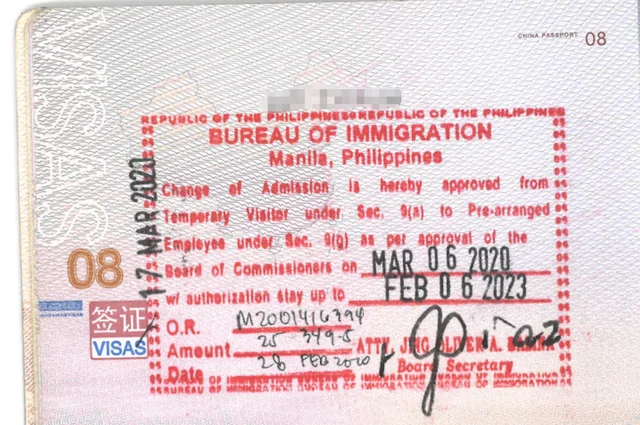
The labor authorization is usually an AEP, while the immigration status for long-term employment is often the 9(g) Pre-Arranged Employment Visa. These two approvals have different purposes and should be planned together.
The Alien Employment Permit
The Alien Employment Permit, or AEP, is the main labor authorization for foreign nationals who will engage in gainful employment in the Philippines. It is issued by the DOLE Regional Office with jurisdiction over the intended workplace.
The AEP does not serve as a visa. It is a labor document that supports the foreign worker’s employment and is typically one of the requirements for a 9(g) work visa. The foreign national may therefore need both an AEP and the correct Bureau of Immigration status.
Who Usually Needs An AEP
Foreign nationals who intend to perform gainful employment in the Philippines generally need an AEP, unless they qualify for a specific exemption. This can include executives, managers, technical specialists, supervisors, consultants in employment-type roles, professionals, and foreign employees assigned by overseas companies.
The requirement may apply regardless of the source of salary. A foreign national paid by a company outside the Philippines may still require an AEP if the person will perform work in the Philippines.
The employer should assess the individual’s real duties and work location rather than relying only on the payroll arrangement or job title.
Exemptions and Certificates of Exclusion
Some foreign nationals may be exempt from the AEP requirement. Examples may include diplomatic personnel, accredited foreign government officials, members of qualifying international organizations, and certain individuals who hold a special legal status.
However, exemption does not mean that the person can simply ignore DOLE requirements. In many cases, the foreign national must obtain a Certificate of Exclusion from the appropriate DOLE office to formally document the exemption.
The exemption analysis should be performed carefully. A person should not assume exemption merely because they are a shareholder, director, missionary, consultant, investor, or spouse of a visa holder.
The Labor Market Test
A central part of the AEP process is the labor-market test. The employer must show that no competent, able, and willing Filipino is available to perform the service for which the foreign national is being hired.
Under updated AEP rules, employers may be required to advertise job vacancies through multiple public platforms, including PhilJobNet, before filing the AEP application. The vacancy notice must contain detailed information about the employer, position, qualifications, workplace, foreign applicant, intended employment period, and the DOLE office where the application will be filed.
This requirement is designed to give Filipino workers a fair opportunity to apply before a foreign national is selected.
The Economic Needs Test
Some employers may also be subject to an Economic Needs Test. This assessment can apply to companies receiving government incentives, operating in strategic investment sectors, or functioning in public utilities.
The Economic Needs Test may require the employer to provide more detailed evidence that the foreign worker’s employment is necessary to the company’s operations, investment commitments, technology requirements, or business objectives.
This is particularly relevant for companies with government incentives or projects that have a strong national-development component.
The Understudy Training Program
Updated rules may require certain employers to establish an Understudy Training Program. The objective is to ensure that foreign employees transfer skills and knowledge to Filipino workers who may eventually assume the role.
The employer may need to designate Filipino understudies and submit a training plan outlining the skills to be transferred, the training methods, the schedule, and expected results. The plan should be realistic and linked to the actual foreign position.
This requirement reflects the policy that foreign employment should create long-term value for the Philippine workforce.
Employer Responsibilities
The employer is the primary party responsible for compliance in the employment of foreign workers. The company must file the AEP application, provide accurate corporate documents, describe the role truthfully, and maintain records supporting the foreign hire.
Key employer responsibilities include:
- Confirming that the foreign worker is legally eligible for the role.
- Publishing the job vacancy when required.
- Preparing a valid employment contract.
- Filing with the proper DOLE Regional Office.
- Providing proof of company registration and legal operation.
- Supporting the foreign employee’s 9(g) visa or other immigration status.
- Maintaining payroll, tax, and employment records.
- Reporting material changes in the worker’s employment.
The employer should not treat foreign employment as the employee’s personal responsibility. The sponsorship and compliance obligations belong to both parties, but the employer drives most of the filing process.
Step 1: Define The Foreign Position
The first step is to define the exact position the foreign national will hold. The job description should identify the title, duties, qualifications, work location, reporting line, salary, and duration of employment.
A vague title such as “consultant” or “manager” may not be enough. DOLE and immigration authorities need to understand why the position requires the foreign worker’s particular qualifications.
The employer should also make sure that the actual duties match the company’s registered business activities and any industry licenses it holds.
Step 2: Check Whether An AEP Is Needed
Before filing, the employer should determine whether the foreign national requires an AEP or qualifies for a Certificate of Exclusion. This depends on the person’s visa, legal status, role, and applicable exemption category.
If the employee needs an AEP, the company should start the process early. If the company believes the employee is exempt, it should obtain the formal documentation that proves the exemption rather than relying on an internal opinion.
Step 3: Conduct The Required Job Posting
If the labor-market test applies, the employer must post the vacancy in the required public channels. Updated rules describe job postings on at least three public platforms, including PhilJobNet, before hiring foreign nationals.
The posting should contain accurate details about the employer, role, qualifications, work location, foreign applicant, and intended period of employment. The employer should keep copies or screenshots of the postings and proof of publication.
False, incomplete, or generic job postings can create problems during the AEP review.
Step 4: Prepare The AEP Application
The employer files the AEP application with the DOLE Regional Office that has jurisdiction over the intended workplace. Required documents may include the completed application form, employment contract, passport copy, company registration papers, business permit, and proof of the labor-market test.
The employer may also need to submit the foreign worker’s curriculum vitae, credentials, professional licenses, certifications, and proof of relevant experience. These documents help show why the applicant is qualified for the position.
Step 5: Respond To DOLE Review
DOLE reviews the application to determine whether the foreign worker’s employment is justified. The agency may ask for additional documents, clarification of the job description, proof of advertising, or more information about the company’s business needs.
Companies should respond quickly and accurately. A rushed or inconsistent response can delay the permit or cause the application to be denied.
If the company is subject to an Economic Needs Test or Understudy Training Program, those materials should be integrated into the response.
Step 6: Secure The Work Visa
After the labor-side requirements are addressed, the employer must support the foreign national’s immigration application. For long-term employment, this often means a 9(g) Pre-Arranged Employment Visa from the Bureau of Immigration.
The AEP is generally one of the documents required for the 9(g) visa. The foreign employee should not begin regular work merely because the AEP has been filed or issued. The appropriate immigration authority should also be in place.
Step 7: Maintain Ongoing Compliance
The employment of foreign workers does not end with the initial approval. The employer must monitor visa expiration, AEP validity, ACR I-Card status, annual reporting, payroll obligations, and any changes in the worker’s role or work location.
A material change in job title, employer, workplace, or contract may require an amendment or a new application. Employers should review these issues before making changes rather than after the worker has already started a new role.
Documents Commonly Required
The exact requirements vary by case, but employers commonly need to prepare:
- Completed AEP application form.
- A passport copy of the foreign worker.
- Notarized employment contract or appointment letter.
- Job description and qualifications.
- Proof of company registration.
- Business or mayor’s permit.
- Proof of job posting and labor-market test compliance.
- Foreign worker’s résumé, diplomas, certifications, and professional credentials.
- Understudy Training Program, if required.
- Economic Needs Test documentation, if applicable.
- AEP approval for the subsequent work visa filing.
- Immigration forms and corporate documents for the 9(g) visa.
Document consistency is essential. The title, duties, salary, employer, location, and duration should match across the AEP, employment contract, visa petition, and payroll records.
Working Without Authorization
A foreign national who works without the required employment permit and immigration status may face fines, imprisonment, deportation, or other immigration consequences. Employers may also face penalties and regulatory exposure.
The risk is not limited to obvious unauthorized employment. A person holding a tourist visa, visitor visa, or investor status may still need additional authorization before performing work in the Philippines.
Employers should not allow foreign employees to start regular duties while waiting for permits unless a lawful temporary authority, such as a Provisional Work Permit, has been issued.
Common Mistakes
Employers and foreign workers often make avoidable mistakes, including:
- Assuming that a tourist visa allows employment.
- Assuming that a foreign payroll eliminates the AEP requirement.
- Filing an AEP without first completing the required job posting.
- Using a job description that does not match the foreign worker’s actual duties.
- Failing to prepare an understudy training plan when required.
- Ignoring the Economic Needs Test for companies subject to it.
- Treating the AEP as a complete work visa.
- Letting the AEP, 9(g) visa, or ACR I-Card expire.
- Changing the worker’s position or employer without assessing the immigration consequences.
- Assuming an exemption without obtaining a Certificate of Exclusion.
These mistakes can delay operations, create enforcement risk, and jeopardize the foreign worker’s lawful stay.
Final Insights
The employment of foreign workers in the Philippines is permitted when it serves a legitimate business need and follows the required labor and immigration processes. Employers must usually show that the role cannot be filled by a qualified Filipino, secure an AEP from DOLE, and support the foreign worker’s appropriate visa status.
Updated rules may also require public job postings, an Economic Needs Test for certain companies, and an Understudy Training Program to ensure skills transfer to Filipino workers. Employers who plan early and coordinate labor, immigration, and payroll compliance can hire foreign specialists more effectively and with lower legal risk.
Work Visa Philippines helps employers and foreign professionals navigate the process from role design and AEP filing through 9(g) visa processing, registration, and renewal.
Why Choose Work Visa Philippines
For Work Visa Philippines, employment of foreign workers is not just about obtaining a permit. It is a compliance process involving labor-market testing, AEP filing, immigration sponsorship, visa implementation, employee registration, and ongoing renewal management.
Foreign workers need legal authority that matches their actual duties. Employers need a reliable process that allows them to bring in specialized international talent without violating Philippine labor or immigration rules. Contact us today for an initial consultation:
- Contact Us Here
- Fill Out the Form Below
- Call us at +63 (02) 8540-9623