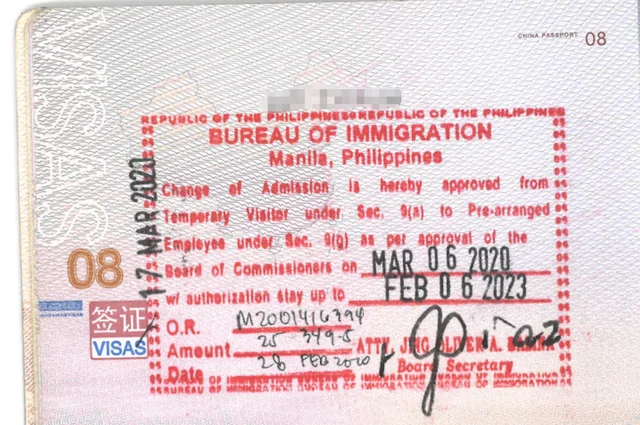
A working visa application in the Philippines is required when a foreign national intends to work legally in the country. For most long-term employment arrangements, the usual route involves an Alien Employment Permit from the Department of Labor and Employment and a 9(g) Pre-Arranged Employment Visa from the Bureau of Immigration.
The process is employer-driven and involves more than one agency. Applicants must prepare personal documents, employment records, company papers, and evidence that the foreign worker is properly authorized to perform the proposed role. Fees also vary depending on the visa category, validity period, applicant’s status, dependents, and government processing options.
What The Working Visa Is
The working visa in the Philippines generally refers to the immigration status that permits a foreign national to work in the country. The most common long-term employment visa is the 9(g) Pre-Arranged Employment Visa.
The Bureau of Immigration describes the 9(g) visa as applying to foreign nationals proceeding to the Philippines to engage in a lawful occupation for wages, salary, or other compensation. It is based on a pre-arranged employment relationship, which means the foreign worker must have a Philippine employer or qualifying petitioner supporting the application.
A tourist visa, visa-free entry, or business-visitor status does not automatically authorize employment.
Why Two Approvals Are Usually Needed
The Philippine working visa system has two separate sides. The labor side is handled by DOLE through the Alien Employment Permit, while the immigration side is handled by the Bureau of Immigration through the appropriate visa or work permit.
The AEP addresses whether the foreign national may occupy the employment position. The 9(g) visa addresses the foreign national’s right to enter, stay, and work under the approved immigration status.
This distinction is important because one document does not replace the other. An AEP is not itself a complete immigration visa, and a 9(g) visa application usually depends on the employment authorization requirements being addressed first.
Who Needs A Working Visa
Foreign nationals who will perform employment in the Philippines generally need the appropriate work authorization, regardless of whether they receive a salary from a Philippine or foreign company. The U.S. Embassy’s guidance states that foreign nationals seeking admission for employment, non-resident foreign nationals already working in the Philippines, and non-resident foreign nationals admitted on non-working visas who wish to work are required by DOLE to secure an AEP, subject to applicable exemptions.
This may include:
- Executives and senior managers.
- Engineers and technical specialists.
- Foreign employees transferred to a Philippine affiliate.
- Teachers, professors, and academic personnel.
- Consultants working in an employment relationship.
- Specialists supporting construction, manufacturing, or technology projects.
- Professionals working for Philippine companies or local branches.
The actual requirement depends on the person’s activities, employer structure, occupation, and length of assignment.
The Alien Employment Permit
The Alien Employment Permit (AEP) is the labor authorization issued by DOLE for foreign nationals who will engage in gainful employment in the Philippines. DOLE’s rules describe the AEP as one of the requirements for obtaining a 9(g) visa and emphasize that it is not, by itself, the exclusive authority to work in the country.
The employer normally files the application with the DOLE Regional Office that has jurisdiction over the workplace. The application usually includes the foreign national’s passport, a notarized appointment or employment contract, the employer’s permit to operate, and other supporting records.
The employer may also need to provide information about how the foreign worker’s knowledge or skills will benefit the Philippine operation and, where applicable, support knowledge transfer to Filipino employees.
The 9G Pre-Arranged Employment Visa
The 9(g) work visa is the main immigration route for foreign nationals who will hold regular, long-term employment in the Philippines. It is issued by the Bureau of Immigration and is based on the petition of the Philippine employer.
The visa is normally tied to:
- The petitioning employer.
- The approved position.
- The employment contract.
- The validity of the labor authorization.
- The period approved by the Bureau of Immigration.
A foreign worker who changes employers should not assume that the visa transfers automatically. A new employer may need to file a new AEP and a new 9(g) petition.
Eligibility Requirements
The applicant and employer must satisfy several conditions before the working visa application can proceed. The foreign worker should have a genuine employment offer and qualifications that match the proposed position.
The employer should be a properly registered Philippine entity or a qualifying business operating lawfully in the country. The employment contract should clearly state the position, duties, compensation, duration, and work location.
The role should also be supported by a legitimate business need. DOLE’s process is designed to consider whether a competent, able, and willing Filipino is available for the position at the time of application.
Documents From The Foreign Worker
The applicant’s documents establish identity, immigration history, health, and qualifications. Common requirements may include:
- Valid passport.
- Passport biographical page.
- Current Philippine visa or admission record, if already in the country.
- Completed Bureau of Immigration application form.
- Employment contract or appointment document.
- Recent photographs.
- Medical certificate when required.
- Police or immigration clearances when required.
- Tax Identification Number records where requested.
- Professional permit or Special Temporary Permit for regulated professions, if applicable.
The exact list may change depending on whether the application is filed inside or outside the Philippines, whether the applicant is changing status, and whether the employee belongs to a regulated profession.
Documents From The Employer
The petitioning employer must usually submit records proving its legal existence and ability to sponsor the foreign worker. Common corporate documents may include:
- Securities and Exchange Commission registration.
- Articles of Incorporation or partnership documents.
- Current General Information Sheet.
- Mayor’s Permit.
- Bureau of Internal Revenue registration or the latest income tax return.
- Proof of payment of the latest tax return.
- Corporate authorization for the signatory.
- Notarized certification of the company’s Filipino and foreign employees.
- Employment contract and job description.
The documents should be current and consistent. A company that has changed its address, ownership, directors, or business activity should update its records before filing where necessary.
Application Process
The working visa process usually follows a sequence involving the employer, DOLE, the Bureau of Immigration, and sometimes the Department of Foreign Affairs or a Philippine Embassy.
The main steps are explained below so employers and applicants can plan the case properly.
Step 1: Confirm The Correct Route
The first step is determining whether the position requires a 9(g) visa, a Special Work Permit, a Provisional Work Permit, or another immigration category.
A short project may require a different authorization from a multi-year employment contract. The employer should review the actual duties and duration rather than selecting a permit only because it appears faster or less expensive.
Step 2: Prepare The Contract
The employer prepares the employment contract or appointment document. The contract should identify the job title, duties, compensation, benefits, contract period, and work location.
This information will be used in the AEP and 9(g) filings. Any inconsistency can lead to questions or requests for correction.
Step 3: File The AEP
The employer files the AEP application with DOLE and submits the required records. DOLE may evaluate the role, the employer, and the foreign worker’s qualifications.
The AEP is connected to the specific employer and position. If the foreign national changes companies or takes a materially different position, the original AEP may no longer be sufficient.
Step 4: File The 9G Petition
Once the AEP requirements are satisfied, the employer files the 9(g) petition with the Bureau of Immigration. The BI checklist may require a joint letter request, consolidated application forms, passport documents, employment records, AEP or DOLE certification, employer tax records, company registration documents, BI clearance, and other materials.
The Bureau of Immigration may conduct pre-screening, require payment of fees, schedule a hearing, and request biometrics or ACR I-Card processing.
Step 5: Apply For A Provisional Work Permit If Needed
If the employee needs to begin working while the 9(g) application is pending, the employer may apply for a Provisional Work Permit. BI describes the PWP as being issued during the pendency of an application for a pre-arranged employment visa.
The PWP is temporary and limited to the approved employment arrangement. It is not an alternative to completing the 9(g) process.
Step 6: Implement The Visa
After approval, the foreign national submits the passport for visa implementation when required. The worker may then complete the ACR I-Card and other registration procedures.
The employee should retain copies of the approved visa, AEP, PWP if issued, ACR I-Card records, and employment documents. These may be needed for extensions, travel, annual reporting, or future immigration applications.
Processing Fees
Processing fees for a working visa in the Philippines are not a fixed amount. The total depends on the application type, visa duration, whether the application is filed inside or outside the Philippines, the number of dependents, ACR I-Card charges, express processing, and other government fees.
The Bureau of Immigration publishes fee information for the 9(g) visa, including separate amounts connected to one-, two-, and three-year validity periods. The BI page identifies different charges for commercial 9(g) applications and additional ACR I-Card fees based on the period issued.
Applicants should confirm the current official schedule before payment because fees may be updated. Third-party articles often combine government charges, professional service fees, courier charges, medical costs, authentication expenses, and express-lane fees into one estimated total. Those items should be separated when preparing a budget.
Other Costs To Budget For
In addition to the principal immigration and labor fees, employers and applicants may need to budget for:
- AEP filing charges.
- 9(g) visa application and implementation fees.
- ACR I-Card issuance.
- BI clearance or certification fees.
- Medical examinations.
- Police clearances.
- Apostille or authentication of foreign documents.
- Translation costs.
- Courier and passport delivery charges.
- Professional or representative fees.
- Dependent visa applications.
- Renewal or extension costs.
These amounts vary by case and provider. Work Visa Philippines can help distinguish official government charges from case-management and document-preparation costs.
Processing Time
The timeline depends on document completeness, agency workload, filing location, employer records, and whether the applicant needs additional review. The AEP must be addressed before the 9(g) petition can usually proceed, so the total process is longer than a simple visitor visa application.
Employers should begin well before the planned start date. If the employee must start quickly, the employer should consider whether a Provisional Work Permit is available while the main visa application is pending.
No consultant should guarantee approval or promise a fixed timeline without reviewing the specific employer and employee file.
Renewal And Extension
The 9(g) visa and AEP must be monitored before expiry. Renewal generally requires updated employment records, a valid or renewed AEP, current corporate documents, and the appropriate Bureau of Immigration filing.
The employer should begin renewal planning early because a lapse can disrupt lawful work and residence. The worker should also check whether the employment contract, job title, salary, or workplace has changed since the original approval.
A renewal is not the right solution for a material change in employer. A new company may need a new petition.
Changing Employers
A 9(g) visa is employer-specific. If the worker resigns or transfers to another Philippine employer, the visa does not automatically follow the employee.
The old immigration status may need to be downgraded or canceled, and the new employer may need to obtain a new AEP and file a new 9(g) application. The employee should obtain advice before ending the current employment because the timing can affect lawful stay and work authorization.
Common Mistakes
The following mistakes commonly cause delays or compliance problems:
- Starting work on a tourist or visa-free status.
- Assuming the AEP is the same as a visa.
- Filing the 9(g) application without the required labor documents.
- Using an employment contract that does not match the job actually performed.
- Submitting outdated company tax or permit records.
- Failing to obtain a professional permit for regulated work.
- Ignoring ACR I-Card and registration requirements.
- Waiting until shortly before expiry to renew.
- Treating a 9(g) visa as transferable to another employer.
- Relying on unofficial fee schedules without checking the current BI charges.
Employers can reduce these risks by preparing the labor and immigration filings as one coordinated case.
Next Steps
The working visa process in the Philippines usually begins with a genuine employment arrangement, continues with the Alien Employment Permit, and proceeds to the 9(g) Pre-Arranged Employment Visa when the role is long-term and employer-sponsored.
Applicants should prepare the correct documents, confirm current government fees, budget for related costs, and plan early enough to address agency processing times. A Provisional Work Permit may be available for eligible employees who need to begin work while the 9(g) application is pending, but it does not replace the final visa.
Work Visa Philippines helps foreign professionals and Philippine employers manage the application from initial assessment through AEP filing, visa processing, registration, and renewal planning.
Is Assistance Available?
Yes. The working visa process in the Philippines is not merely an immigration filing. It involves employment planning, DOLE compliance, employer sponsorship, Bureau of Immigration review, document preparation, fees, registration, and renewal management.
Foreign workers need a status that matches their actual work. Philippine employers need a process that protects operations and prevents unauthorized employment. Coordinating both sides makes the application more efficient and easier to maintain. Contact the Work Visa Philippines team today for an initial consultation:
- Contact Us Here
- Fill Out the Form Below
- Call us at +63 (02) 8540-9623