Foreign employment in the Philippines is possible, but it is tightly regulated and depends on getting the right labor and immigration permissions before work begins. For Work Visa Philippines, this matters because foreign nationals must follow the correct route for lawful employment, and employers must sponsor and document the hire properly.
The main point is simple: a foreigner cannot just arrive and start working. In most cases, the person needs an Alien Employment Permit from DOLE and, depending on the role and duration, the proper work visa or related immigration status from the Bureau of Immigration.
What Foreign Employment Means
Foreign employment refers to work performed in the Philippines by a non-Philippine national, regardless of where the salary is paid or how long the assignment lasts. The U.S. Embassy notes that all foreign nationals seeking admission for employment, and even non-resident foreign nationals already in the Philippines who wish to work, are required by DOLE to secure an Alien Employment Permit.
This definition is broad because the rules are designed to regulate the act of working, not just the source of compensation. In practice, that means a foreigner may need authorization even if the payment is made abroad or the assignment is temporary.
Legal Basis For Foreign Employment
Foreign employment is governed by a combination of immigration and labor rules. The immigration side controls whether the foreigner may stay and enter in the right status, while the labor side determines whether the role can be occupied by a foreign national.
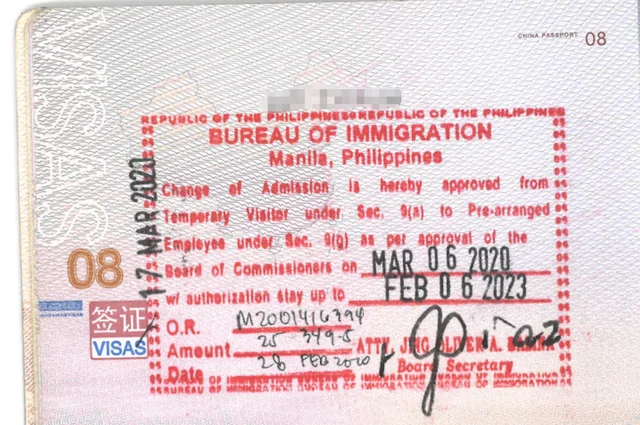
The 9(g) pre-arranged employment visa is the most common long-term work visa, and the AEP from DOLE is typically required before the visa can be filed. The Bureau of Immigration also issues a Provisional Work Permit during the pendency of a pre-arranged employment visa application.
Why Employers Need To Be Careful
Employers are central to foreign employment compliance because they are usually the petitioning party. The employer must show that the foreign worker is needed, that the role is real, and that the proper permits are filed in the correct order.
If the employer skips the process or files the wrong category, the foreign national may be working without proper authorization. That can lead to penalties, interruption of operations, and immigration problems for both the company and the employee.
The AEP Requirement
The Alien Employment Permit is the labor authorization that foreign nationals need for employment in the Philippines. The U.S. Embassy states that every foreign national seeking employment in the Philippines, all non-resident foreign nationals already working in the Philippines, and all non-resident foreign nationals admitted on non-working visas who wish to work are required to secure an AEP.
The AEP is generally applied for through the local DOLE office by the employer. The permit’s validity depends on the work contract and the position held by the foreign national.
The 9G Work Visa
For long-term foreign employment, the 9G visa is the usual immigration route. It is the pre-arranged employment visa issued by the Bureau of Immigration for foreign nationals employed by a Philippine company.
The visa is tied to a specific employer and position. That means it is not a general work authorization and does not transfer automatically if the employee changes companies.
Short-Term Work And The Special Work Permit
Not every foreign employment arrangement requires the same visa. In some cases, if the assignment is short enough, a Special Work Permit may be more appropriate than a full 9G visa.
This distinction matters for employers because the length and nature of the assignment affect the immigration route. Short-term projects, training, or limited technical work may fall under different rules than a long-term job offer.
Who Usually Works Under Foreign Employment Rules
Foreign employment rules often apply to executives, technical specialists, managers, consultants, and other foreign workers whose skills are needed by the Philippine employer. The 9G visa is commonly used for these roles because it is the standard route for formal, long-term employment.
In practice, this category is used when the employer needs a foreign national to take on a genuine business role rather than a temporary visitor activity. The immigration and labor filings should reflect the actual work to be performed.
How The Application Process Usually Works
The usual process begins with the employer determining the right immigration route and preparing the work contract. Next, the employer applies for the AEP through DOLE.
Once the AEP is in place, the employer can move forward with the 9G visa application at the Bureau of Immigration. If the worker needs to start before final approval, the Bureau of Immigration may issue a Provisional Work Permit while the visa application is pending.
Provisional Work Permit
A Provisional Work Permit is issued to a foreign national during the pendency of an application for a pre-arranged employment visa. This gives the employee temporary legal working authority while the 9G application is still being processed.
That matters because foreign employment often cannot wait for a full immigration timeline. The PWP can bridge the gap between the job start date and the final visa approval, allowing work to begin sooner in a lawful way.
What Documents Are Commonly Needed
The exact list will depend on the role and filing location, but foreign employment cases usually require a combination of employer and employee documents. Typical records include:
- The employment contract.
- A passport copy of the foreign worker.
- Business permits or company registration documents.
- AEP approval from DOLE.
- BI visa forms and supporting letters.
- Medical or biometric requirements if requested by the agency.
- Dependent documents, if family members are included.
The employer should make sure all documents are consistent. If the job title, salary, or employer details do not match across the filings, the case can become delayed or questioned.
Dependents In Foreign Employment Cases
Foreign employment is not just about the worker. In many cases, spouses and children may also need to relocate, which is why dependent processing is part of the planning stage.
For 9G visa holders, dependents may be included under the visa structure, subject to the required proof of relationship, such as marriage and birth certificates. This makes the employment move more practical for foreign professionals relocating with their families.
Social Security And Insurance Concerns
Foreigners working in the Philippines should also think about social security and insurance. The InterNations guide notes that private sector employees, domestic workers, and the self-employed are covered by the social security system, but expatriates may still want to maintain home-country coverage or private plans because local coverage may not fully match their expectations.
This is important for foreign employment planning because visa compliance alone is not enough. The employer and employee should also consider retirement, sickness, disability, and medical protection during the assignment.
Work Culture In The Philippines
Foreign employment is not only a legal issue; it is also a workplace culture issue. The InterNations material describes Filipino workplaces as hierarchical, personal, and status-conscious, with strong emphasis on respect, formal titles, patience, and relationship-building.
For foreign employees, this means adaptation matters. Understanding local business etiquette can help avoid friction and make the assignment more successful, especially in organizations where hierarchy and personal trust are central to daily interactions.
Common Problems
A common problem in foreign employment cases is assuming that a foreigner can work just because a visa was issued for another purpose. That is not correct. The proper work permit and immigration status must match the actual activity.
Other issues include starting work too early, failing to secure the AEP first, or using the wrong visa route for the length of the assignment. Employers should plan ahead because foreign employment cases usually take time and require multiple approvals.
Final Insights
Foreign employment in the Philippines is fully possible, but it must be handled through the proper labor and immigration framework. In most cases, that means securing an AEP, then moving to the right work visa or provisional permit, and making sure the employer and worker stay compliant throughout the assignment.
For foreign professionals and Philippine employers alike, the key is early planning, correct documentation, and respect for both legal and workplace norms. Work Visa Philippines helps make that process clearer so foreign employment can proceed lawfully and smoothly.
Is Assistance Available?
Yes. For Work Visa Philippines, foreign employment is a core part of the service model because foreign workers need legal authorization, and employers need a practical compliance path. The main challenge is not just getting a visa, but matching the right visa, the right labor permit, and the right job structure.
When done correctly, foreign employment helps businesses bring in specialized talent and helps foreign professionals work lawfully in the Philippines. When handled incorrectly, it creates risk for the worker, the employer, and the assignment itself. Contact us today for an initial consultation:
- Contact Us Here
- Fill Out the Form Below
- Call us at +63 (02) 8540-9623