Companies in the Philippines may need to hire a foreign employee when a position requires specialized expertise, international experience, technical knowledge, or skills that are not readily available in the local workforce. However, hiring a foreign national involves more than signing an employment contract. Employers must determine whether the position can be filled by a foreign worker, obtain the required labor authorization, secure the appropriate immigration status, and maintain compliance throughout the employment relationship.
The rules have changed significantly in recent years. The Department of Labor and Employment (DOLE) issued Department Order No. 248, Series of 2025, establishing updated rules for employing foreign nationals. Department Order No. 248-A subsequently clarified several provisions. In June 2026, DOLE also centralized the processing and issuance of Alien Employment Permits (AEPs) at its Central Office.
For companies planning to hire a foreign employee, understanding these requirements before the employee starts work is essential. The appropriate process depends on the position, qualifications, employer, duration of employment, and immigration category involved.
Can a Philippine Company Hire a Foreign Employee?
Philippine companies can employ foreign nationals when the applicable labor and immigration requirements are satisfied. However, employers should not assume that every vacant position can simply be filled by a foreign worker.
The Philippine foreign-employment framework considers the availability of qualified Filipino workers. DOLE’s current rules also emphasize the development of Filipino workers and the transfer of knowledge and skills where applicable.
Before hiring a foreign national, an employer should establish:
- The exact position and duties
- The qualifications required
- The candidate’s education and experience
- The business reason for hiring a foreign national
- Whether an AEP is required
- Whether an exemption or exclusion applies
- The appropriate immigration category
- Whether professional licensing requirements apply
A foreign employee should not be treated like an ordinary local hire from an immigration perspective. Labor authorization and immigration requirements must be addressed before employment begins.
What Should Employers Do Before Hiring?
The preparation stage can determine how smoothly the application proceeds. Employers should assess the position and the candidate before finalizing the employee’s start date.
A practical review should cover five areas.
- Define the position. Prepare a clear description of the employee’s duties, responsibilities, reporting structure, and workplace.
- Review qualifications. Check the candidate’s education, professional experience, technical skills, certifications, and licenses where applicable.
- Determine work authorization. Establish whether the employee requires an AEP or qualifies for an applicable exemption or exclusion.
- Identify the immigration category. Determine whether the employee requires a 9(g) Pre-Arranged Employment Visa, Special Work Permit, or another immigration status.
- Plan the start date. Do not assume that signing an employment contract or entering the Philippines automatically permits the foreign national to begin working.
This assessment should be completed before the employee starts performing services in the Philippines.
The Alien Employment Permit Is a Key Requirement
For many foreign employees, the Alien Employment Permit is a central part of the hiring process.
An AEP is a labor authorization issued under DOLE’s foreign-employment framework. The system considers whether the foreign worker is qualified for the position and whether a competent, able, and willing Filipino worker is available to perform the work.
DOLE’s 2025 framework also includes measures concerning skills development and the transfer of knowledge and technology to Filipino workers in applicable circumstances.
An employer that wants to hire a foreign employee should therefore not view the AEP as merely an administrative form. The company needs to provide accurate information about the employer, employee, position, duties, qualifications, compensation, and other information required under the current application procedure.
The application should accurately represent the actual job. Creating a different job description simply to support an immigration application can create compliance problems later.
The Labor Market Test Matters
The availability of Filipino workers is an important consideration under the AEP system.
DOLE’s 2025 rules introduced changes to the labor-market process. Department Order No. 248-A subsequently clarified the publication requirements, including the requirement for publication in a newspaper of general circulation. Posting through PhilJobNet and the relevant Public Employment Service Office or Job Placement Office is encouraged but is not a precondition for filing the AEP application under the amended rules.
Employers should therefore use the current DOLE requirements instead of older articles that describe previous procedures.
The position should have a genuine job description that accurately identifies the qualifications and responsibilities required. The employer should also be able to explain why the foreign candidate is being considered for the role.
AEP Processing Is Now Centralized
A major change took effect in 2026.
Effective June 9, 2026, DOLE centralized the processing, evaluation, and issuance of AEPs at the DOLE Central Office. Regional Offices were directed to stop accepting, processing, evaluating, and issuing new and renewal AEP applications.
This is important because older foreign-worker guides may still instruct employers to submit AEP applications through the DOLE regional office covering the employee’s workplace.
Companies preparing to hire foreign nationals should instead follow the current centralized procedure and use the latest DOLE forms and documentary requirements.
Because government procedures can change, employers should verify the current filing process before submitting an application.
What Visa Does a Foreign Employee Need?
After assessing the labor authorization, the employer must determine the appropriate immigration status.
The 9(g) Pre-Arranged Employment Visa is a principal immigration route for foreign nationals with arranged employment in the Philippines. The Bureau of Immigration describes the commercial 9(g) category as applying to foreign nationals proceeding to the Philippines to engage in a lawful occupation for wages, salary, or other compensation.
However, not every foreign employee should automatically use a 9(g) visa.
Other immigration arrangements may apply to particular circumstances, including certain short-term employment, special non-immigrant categories, and foreign nationals connected with qualifying enterprises or projects.
The appropriate category depends on the actual employment arrangement, the employer, and the nature and duration of the work.
How Does the 9(g) Employment Visa Work?
The 9(g) visa is based on pre-arranged employment with a Philippine employer.
The Bureau of Immigration requires applicants to submit the applicable forms and supporting documentation. The current BI process can involve document submission and evaluation, payment of applicable fees, a hearing, ACR I-Card processing, approval, and visa implementation.
The employer may need to provide corporate and employment documents supporting the application.
These may include:
- Employment or appointment documents
- Job description
- Corporate registration records
- Company certifications
- Information concerning Filipino and foreign employees
- Foreign employee identification documents
- Other documents required by the BI
The exact requirements should be checked against the current BI checklist because requirements can vary according to the circumstances of the application.
Can the Employee Start Working Before the 9(g) Is Approved?
Entering the Philippines does not automatically authorize a foreign national to work.
A foreign employee should not begin working simply because the company has issued an employment contract or because the individual entered the country as a visitor.
In certain circumstances, the Bureau of Immigration may issue a Provisional Work Permit (PWP) while a pre-arranged employment visa application is pending. The PWP is separate from the AEP and the eventual 9(g) visa.
Employers should determine whether a PWP is appropriate and ensure that all required labor authorization has also been addressed.
The employee’s actual start date should be coordinated with the applicable work and immigration authorizations.
What If the Employee Will Work for Only a Few Months?
Not every foreign hire requires a long-term employment visa.
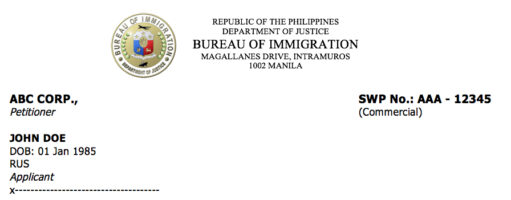
The Bureau of Immigration provides a Special Work Permit (SWP) for certain foreign nationals undertaking qualifying short-term employment. The commercial SWP is intended for specific temporary employment situations and has its own requirements.
This may be relevant to certain:
- Short-term specialists
- Technical experts
- Project personnel
- Consultants
- Temporary foreign professionals
However, employers should not select an SWP solely because the assignment is short. The actual activities, employer, duration, and circumstances should first be reviewed to determine the appropriate authorization.
Does a Foreign Employee Need Professional Licensing?
Work authorization and professional licensing are separate requirements.
A foreign national may have the necessary immigration status and AEP but still require authorization from a Philippine professional regulatory body before practicing a regulated profession.
The Professional Regulation Commission has stated that foreign nationals intending to practice regulated professions in the Philippines must obtain the appropriate authorization, including a Special Temporary Permit where applicable.
Employers should therefore consider the employee’s actual duties rather than relying solely on the job title.
A foreign professional performing regulated professional work may need additional authorization even after receiving an employment visa.
What Documents Should Employers Prepare?
Good documentation is essential when a company plans to hire a foreign employee.
The exact requirements depend on the applicable AEP and immigration category, but employers should generally prepare documents establishing the legitimacy of the employment and the company’s ability to employ the worker.
Company documents may include:
- SEC registration documents
- Corporate records
- Business permits
- Applicable industry licenses
- Other documents required by DOLE or the BI
Employment documents may include:
- Employment contract
- Job description
- Appointment documentation
- Compensation details
- Work location
- Employment period
Foreign employee documents may include:
- Passport
- Immigration documents
- Curriculum vitae
- Educational records
- Professional credentials
- Licenses or certifications
The employer should always verify the current checklist before filing.
Why Document Consistency Matters
Information submitted to different government agencies should accurately describe the same employment arrangement.
The employee’s name, position, employer, duties, compensation, employment period, and other important details should be consistent across the relevant documents.
For example, an employment contract identifying an employee as a technical director should not describe substantially different duties in the AEP application without a legitimate explanation.
Consistent documentation helps the employer demonstrate that the foreign national is performing the work for which the relevant authorization was obtained.
What Are the Employer’s Responsibilities After Hiring?
Hiring a foreign employee is not a one-time compliance exercise.
Once the employee has been authorized to work, the employer should continue monitoring the validity of the employee’s AEP, visa, passport, and other applicable documents.
Ongoing compliance can include:
- Monitoring AEP validity
- Monitoring visa validity
- Preparing renewals
- Maintaining employee records
- Processing payroll and taxes correctly
- Reviewing statutory contributions
- Monitoring changes in employment
- Reviewing professional licensing
- Completing required procedures when employment ends
Employers should also review compliance before changing the employee’s position or employer.
What Happens If the Employee Changes Position?
A significant change in employment should be reviewed before it takes effect.
An AEP and immigration status are connected to the circumstances under which the foreign national is authorized to work. A promotion, transfer, change in duties, or move to another Philippine legal entity can, therefore, require additional assessment.
Employers should review:
- Promotions
- Changes in job duties
- Transfers between Philippine companies
- Changes in work location
- Changes in employment arrangements
- Extensions and renewals
A foreign employee should not assume that an existing authorization automatically covers a substantially different position.
What About Payroll and Taxes?
Foreign employee compliance also extends to payroll and taxation.
A company hiring a foreign national should assess how compensation will be processed and what Philippine tax and withholding requirements apply.
This becomes particularly important when an expatriate receives compensation from both a Philippine company and an overseas parent company.
For example, an employee may receive a Philippine salary together with allowances or other compensation from a foreign parent. The company should review the complete arrangement rather than considering only the amount processed through the Philippine payroll.
Payroll, tax, HR, and immigration personnel should coordinate when the compensation structure is complicated.
Do Foreign Employees Have Social Security Obligations?
Employers should also assess applicable social protection requirements.
Foreign nationality does not automatically remove an employee from the Philippine statutory systems. Depending on the employee’s circumstances, the company may need to address SSS, PhilHealth, Pag-IBIG, and other applicable obligations.
The Social Security System provides compulsory coverage rules for covered private-sector employees.
PhilHealth’s formal-economy membership rules also cover employees working for qualifying organizations in the Philippines, including foreign-owned entities.
These obligations should be reviewed when establishing the employee’s Philippine payroll rather than after employment has already started.
What If the Company Is Foreign-Owned?
A foreign-owned company operating in the Philippines can hire foreign nationals, but its ownership structure does not automatically exempt it from Philippine employment and immigration requirements.
The company must still determine whether an AEP is required, whether the position is legally available to a foreign national, and which immigration category applies.
Foreign ownership, business registration, labor authorization, and immigration status are separate legal issues.
This distinction is particularly important for multinational companies establishing Philippine subsidiaries, branches, or representative offices.
A Practical Checklist to Hire a Foreign Employee
Employers can use this basic sequence when preparing a foreign hire.
Before Hiring
- Define the position and responsibilities.
- Review the candidate’s qualifications.
- Determine whether the profession is regulated.
- Confirm the Philippine employing entity.
- Determine whether an AEP is required.
- Identify the appropriate immigration category.
Before the Employee Starts
- Complete applicable DOLE requirements.
- Follow the current centralized AEP procedure where applicable.
- Prepare employment and corporate documents.
- Apply for the appropriate visa or permit.
- Obtain professional authorization where required.
- Confirm that the employee has the necessary work authorization.
During Employment
- Monitor AEP and visa validity.
- Maintain accurate employment records.
- Process payroll and withholding correctly.
- Review statutory contributions.
- Monitor passport and immigration documents.
- Review changes in position or employer before implementing them.
When Employment Ends
- Complete final payroll obligations.
- Review AEP requirements.
- Address the employee’s immigration status.
- Complete applicable cancellation or departure procedures.
- Retain appropriate records.
Final Insights
To hire a foreign employee in the Philippines, employers need to coordinate labor authorization, immigration, employment, and, where applicable, professional licensing requirements.
The AEP is a central requirement for foreign nationals covered by DOLE’s foreign-employment rules. The 2025 framework introduced significant changes to the process, while the 2026 reforms centralized AEP processing at the DOLE Central Office.
The employer must also determine the appropriate immigration status. For many foreign professionals taking up regular employment with a Philippine company, the 9(g) Pre-Arranged Employment Visa is a principal route. Other workers may require an SWP or another immigration category depending on their circumstances.
Compliance continues after the employee receives authorization. Employers should monitor AEP and visa validity, payroll and tax requirements, professional licensing, statutory contributions, and changes to the employee’s employment arrangement.
The best approach is to assess the position and employee before work begins, follow current government procedures, and maintain accurate records throughout the employment relationship.
Need Help to Hire a Foreign Employee in the Philippines?
Hiring a foreign national can involve several requirements involving DOLE, the Bureau of Immigration, professional regulatory bodies, and payroll-related agencies.
Work Visa Philippines can assist employers and foreign professionals with employment visas, work permits, AEP requirements, and Philippine immigration procedures.
If your company is planning to hire a foreign employee in the Philippines, contact our team of experts to discuss the employee’s position, employment arrangement, and appropriate work authorization:
- Contact Us Here
- Fill Out the Form Below
- Call us at +63 (02) 8540-9623