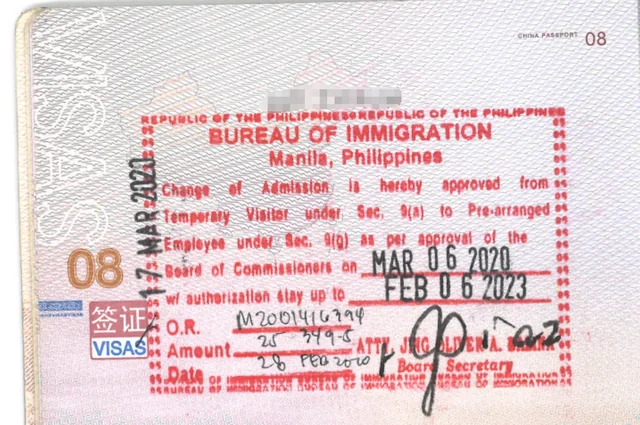
Understanding 9G visa validity is important for foreign nationals working in the Philippines and the companies employing them. The 9(g) Pre-Arranged Employment Visa allows qualified foreign nationals to engage in lawful employment in the Philippines, but the visa does not remain valid indefinitely. It is issued for a specific period and must be extended when the foreign employee intends to continue working in the country.
The Bureau of Immigration (BI) currently lists commercial 9(g) applications and extensions with 1-year, 2-year, and 3-year validity periods. The appropriate period depends on the application and approval, rather than being an automatic entitlement to a particular number of years.
Foreign employees should also understand that 9(g) validity is separate from the validity of an Alien Employment Permit (AEP), passport, ACR I-Card, and other immigration or employment documents. Keeping all of these requirements aligned is an important part of maintaining lawful employment in the Philippines.
What Is a 9(g) Employment Visa?
Before discussing 9G visa validity, it is important to understand what the visa actually authorizes. The 9(g) visa is an employment-based non-immigrant visa for foreign nationals coming to the Philippines for pre-arranged employment.
The Bureau of Immigration describes the commercial 9(g) as available to foreign nationals proceeding to the Philippines to engage in a lawful occupation for wages, salary, or other forms of compensation. The Philippine-based company serves as the petitioner for the commercial employment visa.
This makes the 9(g) different from a temporary visitor status. A foreign national who merely attends meetings or conducts short-term business activities may have a different immigration route. The 9(g) is designed for a foreign national who has an employment arrangement in the Philippines.
The visa is also different from the Alien Employment Permit. The 9(g) concerns immigration status, while the AEP is a labor authorization administered by the Department of Labor and Employment (DOLE), unless the foreign national qualifies for an applicable exemption or exclusion.
How Long Is the 9G Visa Valid?
The current BI service information for commercial 9(g) visas identifies one-year, two-year, and three-year validity periods.
This means that a foreign employee may receive a 9(g) with a validity period of one, two, or three years, depending on the applicable transaction and approval. BI’s published service information also provides separate procedures for extending an existing commercial 9(g) for a foreign national who wishes to continue employment in the Philippines.
Therefore, there is no single answer such as “a 9G visa is always valid for three years.”
A more accurate explanation of 9G visa validity is that the commercial 9(g) system accommodates different validity periods, including one, two, and three years.
Foreign workers should always check the actual validity dates appearing on their immigration records rather than assuming the visa is valid for the maximum period.
Is a Three-Year 9G Visa Automatic?
A three-year period should not be treated as automatic. Although BI’s current published commercial 9(g) information lists three-year validity as an available period, the applicant must still satisfy the applicable requirements and receive approval for the relevant period.
The length of the visa should therefore be determined from the approved immigration record.
This is particularly important for employers planning long-term assignments. An employment contract lasting several years does not by itself mean that the employee automatically receives a three-year 9(g). Immigration approval remains necessary.
The same principle applies when extending an existing visa. The employee should not assume that an extension will automatically be granted for the same period as the previous visa.
How Does 9G Visa Validity Relate to the Employment Contract?
The employment relationship is central to a commercial 9(g) application, but the visa and employment contract are not the same document.
A foreign national receives the 9(g) in connection with qualifying employment in the Philippines. BI’s current requirements include employment-related and employer-related documentation, including a notarized certification concerning the number of foreign and Filipino employees.
Employers should therefore make sure that the employment documentation remains consistent with the immigration records.
If the employee’s position, employer, compensation, or other material employment details change, the employer should determine whether the change requires action with BI, DOLE, or both.
A visa should not simply be treated as an independent authorization that remains unchanged regardless of what happens to the underlying employment relationship.
What Happens When the 9G Visa Expires?
A foreign national who wants to remain employed in the Philippines after the approved 9(g) period must address the expiration before the visa becomes invalid.
BI provides an Extension of Pre-arranged Employee – Commercial transaction for existing commercial 9(g) holders who wish to continue their employment in the Philippines.
The extension process involves submitting the applicable documents, paying the required fees, attending the required processing steps, and completing visa implementation if approved.
The employee should not wait until after the visa has already expired to begin considering the next step.
A practical approach is to review the expiration date well in advance and coordinate with the employer or immigration representative so that the extension requirements can be prepared on time.
What Are the Requirements for a 9G Extension?
The exact checklist should always be confirmed against the current BI requirements because immigration procedures and documentary requirements can change.
BI’s current commercial 9(g) extension information identifies several core requirements, including:
- The applicable BI checklist
- Application form
- Additional information concerning children, when applicable
- Notarized certification of the number of foreign and Filipino employees
- Payment of the applicable fees
- Passport submission for visa implementation after approval
- ACR I-Card processing, where applicable
Additional documents may be required depending on the applicant and the circumstances of the employment.
The employer and foreign employee should therefore avoid relying on a checklist obtained from an old application or an unofficial website.
Is the AEP Valid for the Same Period as the 9G?
The AEP and 9(g) should be treated as separate requirements. Their validity periods may overlap, but they are not automatically identical.
Under DOLE Department Order No. 248, Series of 2025, an AEP is generally valid for one year unless a shorter or longer period is specified based on the duration of employment or activity in the relevant employment arrangement. In no case may the AEP’s validity exceed three years.
This means an employee can have a 9(g) and an AEP with different expiration dates.
For example, a foreign worker may have a three-year 9(g) but an AEP whose validity requires separate monitoring. Employers should maintain a compliance calendar for both rather than assuming that the expiration dates will always match.
This distinction is especially important under the current regulatory system.
What Has Changed With AEP Processing?
Employers managing 9(g) employees should also be aware of a major recent change in AEP administration.
Effective June 9, 2026, DOLE centralized the processing, evaluation, approval, issuance, release, adjudication, and enforcement functions relating to AEPs at the DOLE Central Office. DOLE regional offices were directed to cease accepting, processing, evaluating, and issuing new and renewal AEP applications.
This change does not convert the AEP into a 9(g) visa or eliminate the distinction between labor authorization and immigration status.
Instead, it means employers must follow the current centralized DOLE process when an AEP is required.
Employers should therefore check both BI and DOLE requirements when planning a foreign employee’s continued employment.
Does the ACR I-Card Determine 9G Visa Validity?
The ACR I-Card should not be used as a substitute for checking the actual 9(g) validity period.
The ACR I-Card is an immigration registration and identification document. It is associated with the foreign national’s immigration status but does not independently authorize employment.
BI’s 9(g) procedures include ACR I-Card processing as part of the visa transaction. For extensions, BI states that previously captured biometric data may be used for printing the renewed ACR I-Card, subject to its stated biometric rules.
The important point for employers is that an ACR I-Card and a 9(g) visa are separate immigration documents with different functions.
A foreign worker should not assume that an ACR I-Card remaining valid means that the person’s 9(g) employment authorization is automatically valid for the same period.
Can a 9G Visa Be Extended?
Yes. A foreign national holding a commercial 9(g) visa who wishes to continue employment in the Philippines can apply for an extension through the Bureau of Immigration.
BI expressly provides an Extension of Pre-arranged Employee – Commercial transaction for existing 9(g) holders who intend to continue their employment.
The extension is not simply an automatic renewal of the old visa.
The applicant must submit the applicable requirements, complete the BI process, and receive approval before the extension is implemented.
Employers should therefore treat the visa expiration date as a compliance deadline and not as a date when the company can begin thinking about the employee’s immigration status.
What Happens If the Employee Changes Employers?
A change of employer requires particular attention because the commercial 9(g) is connected to the foreign national’s employment arrangement.
An employee should not assume that a 9(g) issued for one Philippine employer automatically transfers to another company.
BI’s commercial 9(g) framework distinguishes between conversion for foreign nationals proceeding to employment and extension for existing holders who wish to continue their employment.
If a foreign worker changes employers, the new employment arrangement should be reviewed to determine what immigration and labor actions are required.
The employer should also examine whether the foreign national needs a new or updated AEP, unless an applicable exemption or exclusion applies.
What Happens If the 9G Expires While an Extension Is Pending?
This situation should be handled carefully because filing an application and receiving approval are not necessarily the same thing.
A foreign national should not assume that submitting an extension application automatically creates an unlimited right to remain or work under the expired visa.
The employee and employer should confirm the applicant’s actual immigration status, authorized stay, and the status of the pending application with BI.
This is one reason employers should begin preparing an extension before the current visa approaches its expiration date.
The same principle applies to the employee’s AEP. If the AEP is separately required, its status should be monitored independently.
Can a 9G Visa Be Renewed Indefinitely?
It is more accurate to describe the process as extensions of the 9(g) rather than promising that a foreign national can automatically renew the visa indefinitely.
A foreign employee who continues to qualify for employment may apply for an extension, but each extension remains subject to the applicable Philippine immigration requirements and approval.
Continued employment also does not eliminate the employer’s ongoing obligations under Philippine labor and immigration regulations.
The employee’s circumstances may change over time, including the employer, position, employment terms, passport, AEP status, or other immigration circumstances. Each change should be assessed rather than assuming that a previous approval guarantees the next one.
What Should Employers Track?
Because several documents may have different expiration dates, employers should maintain a centralized compliance record for every foreign employee.
At a minimum, the employer should monitor:
- 9(g) visa validity
- AEP validity, when required
- Passport validity
- ACR I-Card status
- Employment contract dates
- Employer and position information
- Applicable professional license
- Annual Report obligations
- Upcoming BI or DOLE filings
- Any changes in employment status
This approach helps prevent the common mistake of checking only the visa expiration date.
For example, a company may discover that a foreign employee’s 9(g) remains valid for another year while the employee’s AEP requires earlier action. Treating the two documents as identical could lead to an avoidable compliance problem.
What Should Foreign Employees Do Before Their 9G Expires?
Foreign workers should not leave immigration compliance entirely to the last minute.
Several months before the expiration date, the employee should confirm with the employer or authorized representative:
- Whether the employment will continue;
- The expiration date of the current 9(g);
- Whether an AEP is required and when it expires;
- Whether the employment contract needs updating;
- Whether the passport remains valid;
- Whether BI requires additional documentation;
- Whether the employee’s position or employer has changed; and
- Whether any travel plans could affect the immigration process.
This review gives the employer enough time to identify missing documents or changes that may require separate action.
9G Visa Validity vs Other Philippine Work Routes
Not every foreign worker in the Philippines uses the commercial 9(g).
Depending on the circumstances, foreign nationals may fall under other immigration categories, including special non-immigrant visa programs, temporary work permits, or other specialized arrangements.
For example, a Provisional Work Permit (PWP) may be relevant to certain foreign nationals while a 9(g) application is pending, subject to the applicable BI requirements. The PWP should not be treated as simply another name for the 9(g). It serves a different purpose.
Likewise, foreign nationals performing temporary or specialized activities may need to examine whether a Special Work Permit is applicable instead of assuming that a 9(g) is always required.
The correct immigration route depends on the actual activity and circumstances of the foreign national.
Final Thoughts
The most accurate answer to the question “How long is a 9G visa valid?” is that commercial 9(g) visas are currently processed in one-, two-, and three-year validity periods, depending on the applicable application or extension and BI approval.
A three-year period is available, but it should not be presented as an automatic entitlement for every foreign employee.
More importantly, 9G visa validity is only one part of foreign employee compliance in the Philippines. The AEP is a separate labor authorization, and under DOLE’s 2025 rules, its validity generally runs for one year unless a shorter or longer period is specified based on the employment or activity, with an absolute maximum of three years.
Since AEP processing was centralized at the DOLE Central Office effective June 9, 2026, employers should also make sure they are following the current DOLE filing process.
Foreign employees and employers should therefore maintain separate records for the 9(g), AEP, ACR I-Card, passport, employment contract, and other applicable requirements. Doing so makes it easier to identify upcoming deadlines and maintain lawful employment.
Need Expert Help?
Managing the validity of a foreign employee’s 9(g) visa requires more than checking one expiration date. Employers must also consider the employee’s AEP, employment arrangement, immigration records, and any changes that have occurred since the original visa was issued.
Work Visa Philippines can assist foreign nationals and Philippine employers with 9(g) applications, extensions, AEP-related requirements, and ongoing work visa compliance.
For assistance, contact our team:
- Contact Us Here
- Fill Out the Form Below
- Call us at +63 (02) 8540-9623