An entry visa in the Philippines is the visa or entry authorization that lets a foreign national come into the country for a specific purpose, such as work, business, or a temporary visit. For workvisaphilippines.com, the term matters because many foreign workers and employers use it loosely, even though the real requirement depends on the person’s nationality, purpose of travel, and whether the stay is short-term or employment-based.
In practical terms, the entry visa is the first immigration step, but it is not always the final permission to work. For many foreign nationals, an entry visa must be paired with a work permit, such as an Alien Employment Permit or Special Work Permit, before the person can legally begin work in the Philippines.
What an Entry Visa Means
The Philippines uses different visa and entry categories depending on why the foreign national is coming. A temporary visitor may enter under a 9(a) visa or, for eligible nationalities, under visa-free entry, while a foreign worker may need an employment-linked visa such as the 9(g) Pre-Arranged Employment Visa.
That means an entry visa is not one single document for everyone. It is a broad concept that covers the initial permission to enter, and that permission must match the real purpose of the trip. If the person is coming to work, the entry permission usually leads to a labor and immigration process, not just a simple tourist stay.
When a Visitor Entry Is Enough
For short trips, a visitor entry may be enough. Many foreign nationals can enter the Philippines without a visa for a limited period, while others must apply for a 9(a) Temporary Visitor Visa before arriving.
This type of entry is usually appropriate for tourism, business meetings, conferences, or other short-term non-employment purposes. However, it does not automatically authorize paid work in the Philippines, even if the person is in the country lawfully.
When an Employment Entry Is Needed
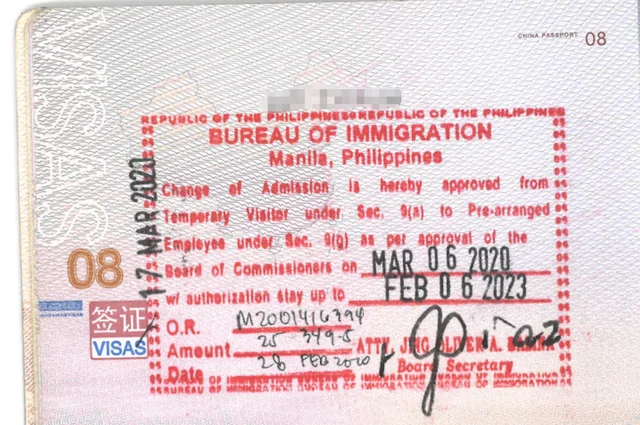
If a foreign national is coming to work in the Philippines, the entry route becomes more specific. The standard long-term route is the 9(g) Pre-Arranged Employment Visa, which is used by foreign nationals proceeding to the Philippines to engage in lawful occupation for wages, salary, or other compensation.
In many cases, the employer must first begin the AEP process with DOLE before the 9(g) can be issued or finalized. That is why the entry visa question is really part of a larger work authorization plan rather than a standalone immigration form.
The 9(g) Pre-Arranged Employment Visa
For most expats, the 9(g) visa is the main work entry visa in the Philippines. The Bureau of Immigration identifies it as the visa for foreign nationals who are coming to the Philippines for any lawful occupation, whether the job is commercial or non-commercial.
The 9(g) is tied to a sponsoring employer and specific employment terms. If the employment ends, the visa status does not continue automatically, which is why companies must manage the visa carefully throughout the assignment.
The Role of the AEP
The Alien Employment Permit, or AEP, is usually the labor permit that supports the 9(g) visa. The AEP shows that the foreign worker is allowed to take the job under Philippine labor rules, and the employer must sponsor the application.
For many employers, the AEP is the first major step before or alongside the entry visa process. Without it, the work visa route is usually incomplete for long-term foreign employment.
Short-Term Entry and Special Work Permits
Not every foreign worker needs the full 9(g) route. If the foreign national is coming for a short assignment, a Special Work Permit (SWP) may be more appropriate.
The SWP is generally used for temporary work that lasts up to six months. It is often used for consultants, trainers, performers, technical specialists, and other short-term workers who need legal authorization to work without moving immediately into a long-term employment visa.
In those cases, the initial entry may still be a visitor entry, but the work itself is made lawful by the SWP.
Provisional Work Permit as a Bridge
Sometimes the foreign worker is already in the Philippines or needs to start work before the full visa has been approved. In that case, the Bureau of Immigration issues a Provisional Work Permit (PWP) while the 9(g) application is still pending.
The PWP is a temporary bridge, not a replacement for the full work visa. It is useful when the employer needs the foreign worker to begin duties before the final immigration approval is completed.
Documents Usually Needed
The documents required for an entry visa or work-related entry depend on the specific category. Still, there are common items that appear in many applications.
Typical documents include:
- Valid passport.
- Completed visa or application forms.
- Employment contract or appointment letter for work-based entries.
- AEP documentation or proof that the AEP process is underway.
- Employer corporate papers and proof of business registration.
- Photographs, supporting letters, and, in some cases, medical or police clearances.
The exact checklist depends on whether the applicant is coming as a visitor, worker, or temporary assignee.
Common Mistakes to Avoid
One of the most common mistakes is assuming that an entry visa and a work permit are the same thing. In the Philippines, they are often related but not interchangeable.
Other common mistakes include:
- Starting work on a visitor entry without the proper work authorization.
- Filing for the 9(g) too late and delaying the assignment start date.
- Confusing short-term SWP cases with long-term employment visa cases.
- Using incomplete documents that cause corrections and re-filing.
These errors can usually be avoided with early planning and the right visa strategy.
Wrapping Up
An entry visa in the Philippines is the starting point for lawful entry, but it must match the reason for travel and, in many cases, the plan to work. For most long-term expats, the 9(g) Pre-Arranged Employment Visa supported by an AEP is the standard work route, while short-term assignments may use an SWP, and pending cases may use a PWP.
The safest approach is to identify the correct entry path before arrival and make sure the visa, permit, and employer documents all align. Work Visa Philippines helps foreign nationals and employers choose the right entry visa strategy so they can enter and work in the Philippines with confidence.
How Work Visa Philippines Can Help
For Work Visa Philippines, the term entry visa is important because it is often the starting point for foreign workers who later need a proper work permit or work visa. A foreign national may enter first as a visitor, then convert to an employment-based status, or enter directly under a work-related route if the documents are ready.
That is why employers and foreign nationals should think in terms of the full immigration pathway, not just the first stamp in the passport. The right entry visa can make the rest of the employment or relocation process much smoother.
Contact our team of specialists to guide you:
- Contact Us Here
- Fill Out the Form Below
- Call us at +63 (02) 8540-9623