If you are trying to understand DOLE regulations for hiring foreign nationals in the Philippines, the most important thing to know is that employers must prove the foreign hire is lawful, necessary, and properly documented before work begins. The current framework is built around the Alien Employment Permit system, labor market testing, and, in many cases, a matching immigration route such as the 9(g) work visa.
Hiring a foreign national is not just an HR decision. It is a regulated process that involves the Department of Labor and Employment, the Bureau of Immigration, and sometimes additional compliance steps depending on the company’s industry and the worker’s role.
Why You Should Follow DOLE Rules
The Philippine government uses DOLE regulations to control how and when foreign nationals may be employed so that local labor is protected and foreign workers are only brought in when genuinely needed. That means employers cannot simply choose a foreign candidate because they want one; they must show that the role could not reasonably be filled by a qualified Filipino worker at the time of application.
These rules matter because they affect hiring speed, documentary requirements, and the legal right of the foreign national to start work. If the employer ignores the rules, the foreign worker may be delayed or exposed to immigration and labor problems, and the employer may also face compliance issues.
The Core Permit: Alien Employment Permit
For most foreign hires, the main DOLE document is the Alien Employment Permit (AEP). The AEP is the labor authorization that confirms the foreign national may be employed for a specific position, employer, and period of time.
Under the current regime, DOLE examines whether the foreign hire is justified and whether the employment will benefit the enterprise without unnecessarily displacing local workers. In practice, this means the AEP is the foundation of most long-term foreign employment arrangements in the Philippines.
Labor Market Test Requirements
One of the most important DOLE regulations in recent updates is the stronger Labor Market Test. Employers are now generally expected to show that the foreign position was publicly offered before the AEP was approved.
Recent guidance and commentary indicate that job advertisements must be published in multiple channels, including PhilJobNet, a newspaper of general circulation, and the appropriate Public Employment Service Office or Job Placement Office. The goal is to make the opening visible to Filipino workers first, so that the employer can demonstrate that hiring a foreign national is actually necessary.
This is a major reason permit processing now takes longer than it used to. The employer must document the hiring effort, not just the job offer itself.
Economic Needs Test and Special Cases
Another recent feature of the DOLE regulations is the Economic Needs Test, which applies in certain sectors and situations. It is especially relevant to employers receiving incentives, operating in strategic sectors, or working in public utility-type industries.
This test looks beyond job postings and asks whether the foreign hire contributes to the country’s economic development or investment objectives. In other words, the foreign national must not only be qualified; the role itself must make economic sense under the policy framework DOLE is applying.
For employers, this means the compliance analysis is no longer limited to “Is there a Filipino available?” It also includes “Does the role fit the broader policy reasons for allowing the foreign hire?”
Understudy Training and Skills Transfer
A major part of modern DOLE regulations is the focus on skills transfer to Filipino workers. Some employers must now implement an Understudy Training Program or Skills Development Program to help ensure that Filipino employees gradually gain the experience needed to take on the role in the future.
This requirement reflects the government’s long-term goal: foreign nationals may be employed when needed, but the local workforce should also benefit from knowledge transfer. For companies, that means hiring foreigners can come with an added responsibility to train local staff and document the training plan.
This is particularly relevant for long-term executives, technical experts, and specialists brought in to set up systems or train local teams.
Filing Timelines and Processing Deadlines
The newer DOLE regulations also clarified timing rules for applications. Recent analysis notes that the AEP application should be filed within fifteen calendar days from execution of the employment contract or issuance of the appointment.
DOLE also indicated that the result of the AEP application should be communicated within fifteen working days from payment of the required fee. These timelines matter because employers often build the work start date around them, and delays can affect onboarding, relocation, and payroll planning.
That said, real-world processing can still be affected by corrections, document issues, or additional review requirements. Employers should treat the timeline as a target, not a guarantee.
Applications From Outside the Philippines
One helpful update in the current DOLE regulations is that AEP applications may be processed while the foreign national is still outside the Philippines. This gives employers more flexibility because they can begin the labor filing before the foreign worker arrives.
However, the AEP will not be released unless the foreign national enters the Philippines with the appropriate pre-arranged employment visa or 9(g) visa and presents it to the DOLE Regional Office. So even though the application can start offshore, the final permit still depends on proper immigration status.
This is important for planning because it lets employers move part of the process forward earlier, while still requiring the full labor-and-visa sequence to be completed correctly.
How DOLE and Immigration Fit Together
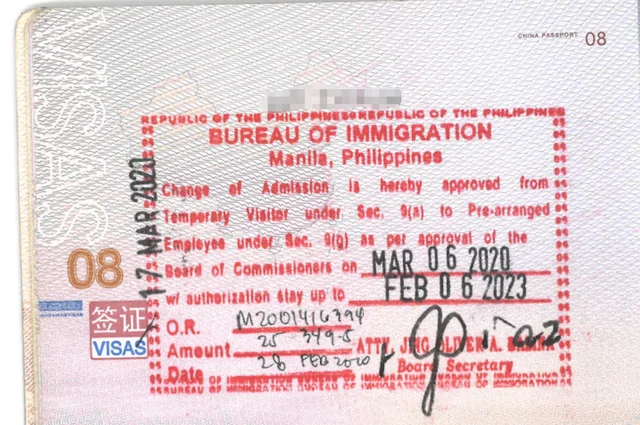
A common mistake is treating the labor permit and the visa as separate, unrelated tasks. In reality, DOLE regulations and Bureau of Immigration rules are closely connected, especially for the 9(g) work visa.
The AEP is the labor side of the process, while the 9(g) is the immigration side. If the AEP is not in place, the visa usually cannot be finalized; if the visa status is wrong, the foreign national may not be able to receive the AEP in the expected way.
For employers, this means the filing strategy should be planned as one integrated project rather than as two isolated applications.
Common Compliance Mistakes
The most common mistakes under DOLE regulations are usually practical, not theoretical. Employers tend to lose time because of missing documents, mismatched job titles, late filing, or insufficient labor market evidence.
Typical mistakes include:
- Filing too late after the contract is signed.
- Using a job advertisement that does not satisfy the current posting requirements.
- Failing to align the AEP with the employment contract and visa application.
- Ignoring understudy or training obligations where they apply.
- Assuming the foreign worker can begin work before the labor and visa process is complete.
These errors are avoidable if the employer treats the process as a compliance project and not just a paperwork task.
What Employers Should Do First
If a company plans to hire a foreign national, the safest first step is to identify the exact role and determine whether it requires a long-term AEP and visa route or a short-term alternative. Once the role is defined, the company should prepare the job posting, collect employer documents, and map the visa timeline alongside the labor timeline.
For short assignments, a Special Work Permit may be more appropriate. For longer employment, the employer should be ready for the AEP, the 9(g), and any training or labor market obligations that apply under current DOLE regulations.
Key Takeaways
The current DOLE regulations for hiring foreign nationals are designed to make foreign employment lawful, justified, and beneficial to both the company and the Filipino labor market. The AEP, labor market postings, possible economic needs tests, and training obligations all exist to ensure that foreign hires are used appropriately and responsibly.
Where To Get Help
For employers, the best approach is to start early, follow the posting and filing rules carefully, and coordinate the labor and visa steps as one process. Work Visa Philippines helps businesses and foreign nationals handle these requirements correctly, so hiring foreign talent in the Philippines stays compliant from the beginning.
Contact our team today to schedule an initial consultation:
- Contact Us Here
- Fill Out the Form Below
- Call us at +63 (02) 8540-9623