For foreign business ownership, the Philippines offers a relatively open investment environment, but the rules still depend heavily on the industry, the company structure, and whether the activity falls under a constitutional restriction or the Foreign Investment Negative List. In many sectors, foreign investors can own up to 100% of a Philippine business, but certain activities still require Filipino majority ownership or are reserved entirely for Filipino citizens.
Foreign business ownership is often the starting point for broader decisions about visas, staffing, corporate compliance, and long-term expansion in the country. A foreign founder or investor who understands the ownership rules early can avoid costly mistakes later when registering the company, hiring staff, or applying for residence and work authorization.
What Foreign Business Ownership Means
Foreign business ownership in the Philippines refers to the extent to which a foreign national or foreign corporation may own equity, control, or participation in a Philippine business entity. It is not a single rule applied to every business type; rather, it depends on whether the enterprise is domestic or export-oriented and whether it falls within any legal restriction.
The Philippines recognizes that foreign capital can help create jobs, transfer technology, and expand market access, which is why the Foreign Investments Act broadly liberalized ownership in many sectors. At the same time, the Constitution and related laws still reserve certain activities for Filipinos or impose ownership caps to protect national interests.
The General Rule on Ownership
The general rule is that foreign business ownership can reach 100% in many Philippine enterprises unless the activity is restricted by the Constitution or the Foreign Investment Negative List. For export enterprises, there are generally no restrictions on the extent of foreign ownership.
For domestic market enterprises, foreigners may also own up to 100% in many cases, but if the sector is on the negative list or otherwise restricted, the ownership cap may be lower. In practice, this means the first question is not “Can a foreigner own a business?” but “What kind of business is it, and is it open to full foreign equity?”
The 60-40 Rule Explained
A major concept in Philippine investment law is the 60-40 rule, which requires at least 60% Filipino ownership in certain corporations and allows foreign ownership up to 40%. This rule still applies to activities reserved by the Constitution and to certain regulated sectors.
Under this framework, foreign investors may participate in a Philippine company, but the business must remain Filipino-majority if the sector requires it. This is why ownership planning matters so much: the wrong structure can make a company non-compliant from day one.
Sectors That Allow 100% Foreign Ownership
Many sectors are now open to full foreign ownership, especially where the law has liberalized investment to support economic development. These include many service businesses, export enterprises, and certain industries that are not reserved or heavily restricted.
Examples commonly cited as open or highly open to foreign ownership include:
- Export-oriented enterprises.
- Many IT and business process services.
- Certain lending, financing, and investment-related companies, subject to their own laws.
- Some educational and training activities, depending on the exact category and legal requirements.
- Retail trade enterprises that meet the statutory capital thresholds.
For foreign investors, the key is to confirm whether the exact activity is allowed and whether the business model fits the legal definition of that sector.
Restricted and Reserved Sectors
Not every business can be fully foreign-owned, and some are restricted because the Constitution or special laws reserve them for Filipinos or impose nationality caps. This is where many investors need careful planning before they incorporate.
Restricted areas often include:
- Mass media, which is generally reserved for Filipino citizens or wholly Filipino-owned corporations.
- Natural resource exploitation and development, which is generally reserved for Filipinos or Filipino-majority entities.
- Public utilities, which are subject to ownership restrictions under the Constitution and related laws.
- Certain professions and regulated activities that require reciprocity or Filipino participation.
- Small-scale retail or other activities that do not meet the statutory capital requirements for foreign participation.
Because these restrictions vary by activity, investors should not rely on broad labels alone. A business may look open at first glance, but still fall into a restricted category once the exact service or product is analyzed.
Capital Requirements for Foreign-Owned Firms
Capital requirements are a major part of foreign business ownership in the Philippines because they help determine whether a foreign-owned company may legally operate. The exact requirement depends on the business type and whether the company is domestic market-oriented or export-oriented.
In some domestic market enterprises where foreign ownership exceeds 40%, the capital requirement may be as high as USD 200,000, though special reductions may apply if the company employs at least 50 Filipino workers or uses advanced technology approved by the Department of Science and Technology. For export enterprises, the capital requirement is typically much lower and foreign ownership can be unrestricted unless another law says otherwise.
Retail trade is a special case: foreign participation is allowed only if the enterprise meets the statutory paid-up capital thresholds, which are significantly higher for full foreign ownership.
Business Structures Foreign Investors Use
Foreign investors can enter the Philippine market through several corporate structures, and the right one depends on control, liability, capital, and operational goals. The choice also affects how the company interacts with tax, employment, and immigration rules.
Common structures include:
- Domestic corporation: A Philippine corporation that may be fully foreign-owned or subject to the 60-40 rule, depending on the activity.
- Branch office: An extension of the foreign company that operates in the Philippines.
- Representative office: A local office that usually performs support or liaison functions but does not generate revenue directly.
- Regional headquarters or regional operating structure: Used by multinational groups for coordination and support functions.
Each structure comes with different registration and compliance obligations, so investors should choose based on the business model rather than convenience alone.
Foreign Ownership and Visas
Ownership and immigration are separate questions, but they are often linked in real business planning. A foreign investor who owns or manages a Philippine company may still need a valid visa or work authorization if they will live or work in the country.
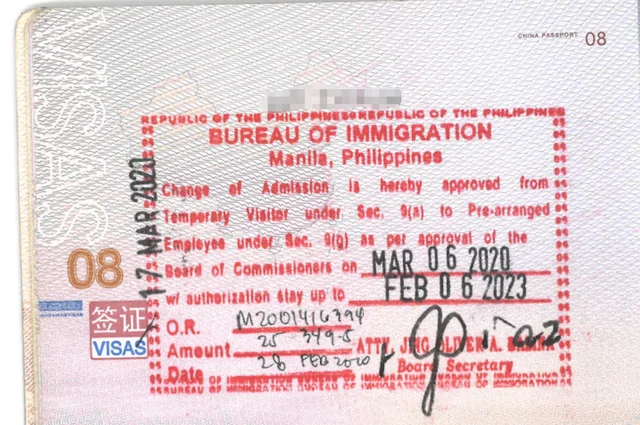
If the investor will be employed by the Philippine entity, the company may need to secure an Alien Employment Permit (AEP) and a 9(g) work visa. For short-term assignments, a Special Work Permit or Provisional Work Permit may be more appropriate.
That is why foreign business ownership should be planned alongside labor and immigration compliance from the beginning.
Common Mistakes Foreign Investors Make
One of the biggest mistakes is assuming that a sector is open to foreign ownership just because it is popular or modern. The legal classification of the activity matters more than the market trend.
Other common mistakes include:
- Using a corporate structure that does not match the intended activity.
- Ignoring the negative list and entering a restricted sector without proper legal review.
- Failing to meet the capital threshold for a business that requires it.
- Forgetting that ownership does not automatically grant a right to work or reside in the Philippines.
- Treating foreign ownership and Filipino control as interchangeable when the law does not.
These mistakes can delay registration, licensing, and operations, or force the investor to restructure the company later.
Wrapping Up
The Philippines offers many opportunities for foreign business ownership, especially in export-oriented and service-based sectors, but the rules still depend on the industry, the corporate structure, and the foreign equity limit that applies. Some activities allow 100% foreign ownership, while others remain subject to the 60-40 rule or are reserved for Filipinos.
Why You Should Work With Us
For Work Visa Philippines, foreign business ownership is more than a corporate law question. It affects how foreign founders, executives, and investors enter the market, how they staff their businesses, and whether they need long-term residence or work status in the Philippines.
An investor who sets up the right structure can move more smoothly into permit processing, hiring, and expansion. An investor who ignores the ownership rules may end up with a company that cannot legally operate the way as planned.
For foreign investors, the safest path is to identify the exact business activity first, check whether it is restricted, and then structure the company and immigration plan accordingly. Our team helps foreign entrepreneurs and investors understand the relationship between ownership, business registration, and the visas they may need to live and work legally in the Philippines:
- Contact Us Here
- Fill Out the Form Below
- Call us at +63 (02) 8540-9623