Hiring a foreign employee in the Philippines involves more than finding a qualified candidate and preparing an employment contract. Employers must consider labor authorization, immigration status, professional licensing, payroll, taxation, social protection, and ongoing compliance with Philippine regulations.
The rules governing foreign employment have also changed significantly. Department of Labor and Employment (DOLE) Department Order No. 248, Series of 2025, introduced new rules on the employment of foreign nationals, while Department Order No. 248-A clarified and amended several provisions. In 2026, DOLE further centralized Alien Employment Permit (AEP) processing at its Central Office.
For employers, foreign employee compliance should therefore be treated as an ongoing process rather than a one-time visa application. The company needs to confirm that the foreign national is legally authorized to perform the specific job, holds the appropriate immigration status, and remains compliant throughout the employment relationship.
What Is Foreign Employee Compliance in the Philippines?
Foreign employee compliance covers the legal requirements that apply when a Philippine employer hires or retains a foreign national.
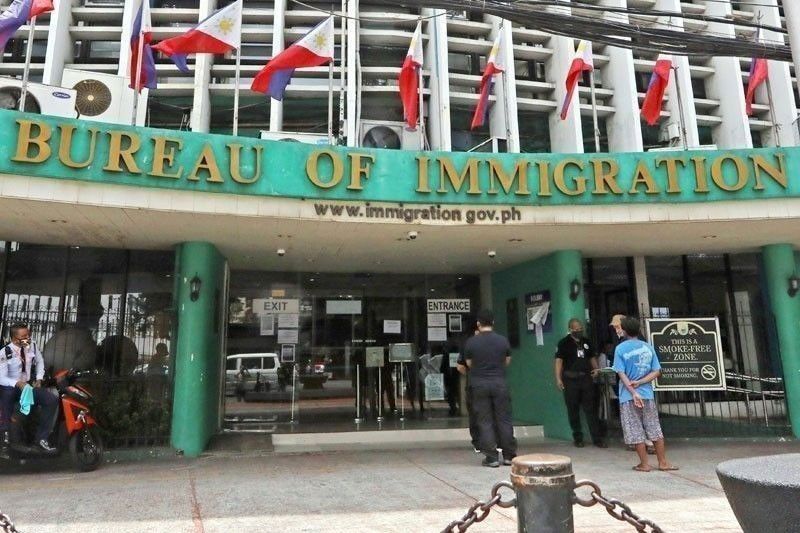
The requirements can involve several government agencies because employment authorization and immigration status are not the same thing. DOLE regulates the employment of foreign nationals through the AEP system, while the Bureau of Immigration (BI) handles immigration matters, including the 9(g) Pre-Arranged Employment Visa. Other agencies may become involved depending on the employee’s profession, tax position, payroll arrangements, and social security coverage.
A compliant employment arrangement should therefore address:
- Eligibility to employ the foreign national
- AEP requirements, applicable exemption, or exclusion
- Immigration authorization
- Professional licensing, where applicable
- Employment documentation
- Philippine payroll and tax obligations
- Social security and health-related contributions, where applicable
- Changes to the employee’s position or employer
- Renewal and cancellation requirements when employment ends
The employer should assess these requirements before the foreign employee begins working rather than treating them as administrative matters that can be resolved afterward.
Can Philippine Companies Hire Foreign Employees?
Philippine companies can employ foreign nationals, but foreign ownership of a company does not automatically remove the restrictions applicable to foreign employment.
DOLE Department Order No. 248 applies to foreign nationals intending to engage in gainful employment in the Philippines and to Philippine employers that intend to hire foreign nationals. Except where a specific exemption or exclusion applies, the employer must secure an AEP before the foreign national actually starts employment.
This means that a company should assess the proposed position before making assumptions about whether a foreign employee can be hired.
The analysis may depend on:
- The actual duties of the position
- The foreign national’s qualifications
- The availability of Filipino workers
- The industry in which the employer operates
- Whether the position involves a regulated profession
- Whether the employer falls under rules requiring additional skills-transfer measures
- Whether the foreign national falls under an AEP exemption or exclusion
- The appropriate immigration category
A foreign-owned company must follow these requirements just as a Philippine-owned employer must when the AEP rules apply.
The AEP Is Central to Foreign Employee Compliance
The Alien Employment Permit is one of the most important requirements for employers hiring foreign nationals in the Philippines.
The AEP is a labor authorization issued under DOLE’s foreign-employment framework. It is intended to regulate foreign employment while taking into account the availability of qualified Filipino workers and the need to develop local skills. DOLE’s rules state that Filipino citizens are to be given preference in accessing employment opportunities and that foreign employment should support the transfer of skills, knowledge, and technology where appropriate.
The AEP is therefore not simply an identification document for a foreign employee.
The employer must provide information about the proposed employment and position, and the application is subject to the requirements of the applicable labor-market process.
For employers, this means that foreign employee compliance starts with the job itself. The company should be able to explain clearly:
- What the foreign employee will do
- Why the position requires the stated qualifications
- Where the employee will work
- What skills and experience the employee possesses
- Whether Filipino workers are available for the position
- Whether additional skills transfer requirements apply
The Labor Market Test Matters
The AEP system includes a labor-market component designed to give qualified Filipino workers an opportunity to apply for positions that an employer proposes to fill with a foreign national.
Under the original Department Order No. 248, the employer was required to publish the vacancy and the name of the foreign national it intended to hire through specified channels. Department Order No. 248-A subsequently amended this requirement so that publication in a newspaper of general circulation is required, while posting through PhilJobNet and the relevant Public Employment Service Office or Job Placement Office is encouraged rather than a precondition for filing the AEP application.
Employers should therefore avoid relying on older articles that describe the publication requirements under the original 2025 rules.
The labor market process also means that employers should not create a job description solely for immigration paperwork. The position, qualifications, duties, and workplace should accurately reflect the actual employment arrangement.
AEP Processing Is Now Centralized
The AEP process underwent another major change in 2026.
Effective June 9, 2026, DOLE centralized the processing, evaluation, and issuance of AEPs at the DOLE Central Office. Regional Offices were directed to stop accepting, processing, evaluating, and issuing new and renewal AEP applications.
DOLE subsequently explained that Department Order No. 248-B, Series of 2026, provides for the centralization of AEP filing, processing, evaluation, approval, issuance, release, adjudication, and enforcement functions. DOLE regional offices no longer process AEP applications under the centralized system.
This change is particularly relevant to foreign employee compliance because older guides may still tell employers to submit applications to the DOLE regional office covering the employee’s workplace.
Employers should instead follow the current centralized filing procedure and use the latest DOLE forms, instructions, and documentary requirements.
Does an AEP Give a Foreign Employee Immigration Status?
An AEP and an immigration visa serve different purposes.
The AEP addresses the foreign national’s authority to engage in employment under Philippine labor rules. It does not replace the immigration authorization required to remain and work in the Philippines.
For many foreign employees hired by Philippine companies, the principal immigration route is the 9(g) Pre-Arranged Employment Visa.
The Bureau of Immigration describes the commercial 9(g) visa as available to foreign nationals proceeding to the Philippines to engage in a lawful occupation for wages, salary, or other compensation.
This distinction is essential for employers. A company should not assume that obtaining an AEP alone means the foreign national has completed all immigration requirements.
Likewise, having an immigration status does not automatically eliminate labor authorization requirements.
Understanding the 9(g) Employment Visa
The 9(g) visa is a major part of the foreign employment system in the Philippines.
A Philippine-based employer generally serves an important role in the application because the visa is tied to the foreign national’s pre-arranged employment. The Bureau of Immigration’s current requirements include the appropriate application checklist and form, along with a notarized certification concerning the number of foreign and Filipino employees.
The BI process can involve document pre-screening, payment of applicable fees, a hearing, ACR I-Card processing, approval, and visa implementation.
Employers should use the current BI checklist instead of relying on old visa guides because requirements, procedures, and fees can change.
The BI’s published 9(g) page, for example, still displays certain fee information marked as updated in 2014 and states that fees may change without prior notice. Employers should therefore verify current fees before budgeting for an application.
What If the 9(g) Application Is Still Pending?
A foreign employee may, in appropriate circumstances, obtain a Provisional Work Permit (PWP) while a pre-arranged employment visa application is pending.
The Bureau of Immigration specifically describes the PWP as a permit issued to a foreign national during the pendency of an application for a pre-arranged employment visa.
The PWP should not be confused with the AEP or the eventual 9(g) visa.
Employers should determine whether the foreign employee qualifies for a PWP and what other labor authorization requirements must be satisfied before allowing the employee to commence work.
This is especially important when a company has already hired a foreign professional, but the immigration process is not yet complete.
Some Foreign Employees May Be Exempt From the AEP
Not every foreign national is necessarily required to obtain a standard AEP.
DOLE’s rules provide for categories that are exempt from or excluded from the AEP requirement. The distinction matters because an employer should not file a standard application automatically without first determining whether the employee falls within a special category.
The appropriate treatment depends on the employee’s circumstances and the specific legal basis for the exemption or exclusion.
Employers should document the basis for relying on an exemption or exclusion rather than simply assuming that a foreign employee does not need an AEP.
A foreign national may also have a special immigration status that does not fit the standard commercial 9(g) visa route. This is why the employment arrangement and immigration status should be assessed together.
Regulated Professions Require Additional Attention
Immigration and employment authorization do not automatically give a foreign professional the right to practice a regulated profession in the Philippines.
This is a separate compliance issue.
The Professional Regulation Commission (PRC) stated in an April 2026 advisory that foreign nationals intending to practice a regulated profession in the Philippines must first obtain the appropriate Special Temporary Permit (STP) from the PRC before engaging in professional practice. The PRC also states that the STP is profession-specific and limited to the authorized period, place, and scope of work.
This can affect foreign employees working in professions such as engineering, architecture, accountancy, and other occupations regulated by Philippine professional laws.
Employers should therefore examine the employee’s actual duties rather than relying only on the job title.
A foreign engineer who performs purely managerial functions may present a different licensing issue from a foreign engineer who personally performs regulated engineering practice. The employer should determine whether the actual work requires professional authorization.
Foreign Employee Compliance Extends to Payroll
Once the foreign national is legally employed, the employer’s obligations do not end with the visa and AEP.
Payroll and tax compliance must also be considered.
Compensation received for services performed in the Philippines can be subject to Philippine income tax and withholding requirements. The appropriate treatment depends on factors such as the employee’s tax status, the nature and source of the income, and the structure of the employment arrangement.
This becomes more complicated when a foreign employee receives compensation from more than one entity.
For example, an employee working for a Philippine subsidiary may receive a Philippine salary while an overseas parent company pays part of the employee’s bonus or allowances. The fact that part of the compensation is paid outside the Philippines does not automatically mean that it is outside the scope of Philippine tax considerations.
Employers should therefore review the complete compensation package rather than examining only the amount processed through the Philippine payroll.
Social Security Obligations Should Also Be Reviewed
Foreign nationality does not automatically mean that an employee is outside the Philippine social protection systems.
The Social Security System states that coverage is compulsory for private sector employees who meet the applicable conditions, including employees who are not over 60 years old. SSS also states that employee coverage takes effect on the first day of employment.
Employers should assess the employee’s circumstances and the applicable rules before deciding whether contributions are required.
PhilHealth must also be considered. Its formal economy membership information includes private employees working for corporations, partnerships, and other organizations organized and based in the Philippines, including foreign-owned entities.
Pag-IBIG requirements may also apply to foreign employees depending on their circumstances and applicable coverage rules.
The key point for employers is that immigration status and social security obligations are separate compliance questions.
Foreign Employee Compliance Can Continue Across Borders
International assignments can create additional compliance issues.
A foreign employee may have a Philippine employment relationship while remaining connected to an overseas parent company. The employer may therefore need to determine how salary, bonuses, allowances, equity compensation, housing, travel benefits, and other remuneration should be treated for Philippine tax and payroll purposes.
Social-security coverage can also become complicated when an employee is temporarily assigned to the Philippines from another country.
Where a social security agreement exists between the Philippines and the employee’s home country, the agreement may affect which country’s social-security system applies to qualifying workers.
Employers should review these issues before the assignment begins rather than waiting until payroll problems arise.
Employment Contracts Should Reflect Philippine Requirements
A foreign employee may arrive with an employment agreement prepared by a foreign parent company, but this does not necessarily address every requirement applicable to employment in the Philippines.
The Philippine employment relationship should be reviewed in the context of applicable Philippine labor rules.
The contract should accurately identify matters such as:
- Employer entity
- Position
- Duties and responsibilities
- Compensation
- Work location
- Employment period
- Benefits
- Working arrangements
- Termination provisions
- Applicable policies
The employment documentation should also be consistent with the information submitted for the AEP and immigration applications.
If the AEP describes one position while the employee’s actual contract assigns substantially different duties, the inconsistency can create compliance concerns.
Changes to the Job Can Affect Compliance
Foreign employee compliance does not stop after approval.
Changes in the employee’s position, employer, workplace, or employment arrangement may require additional review.
An AEP is connected to the employment for which it was granted. Consequently, an employer should not assume that an AEP issued for one position automatically covers a substantially different position.
A change of employer also deserves particular attention. Moving an employee from one Philippine subsidiary to another may represent a change in the employing legal entity even if both companies belong to the same international corporate group.
Before implementing a transfer, promotion, restructuring, or significant change in duties, the employer should determine whether the AEP, immigration status, or other authorization needs to be updated.
What Happens When a Foreign Employee Leaves?
Foreign employee compliance also includes the end of the employment relationship.
When a foreign employee resigns, is terminated, transfers overseas, or otherwise stops working for the Philippine employer, the company should review the required steps for the employee’s AEP and immigration status.
The employer should also complete normal employment-related obligations, including final payroll, applicable tax reporting, benefits processing, and required documentation.
The foreign national’s immigration status should be addressed separately. Simply ending the employment relationship does not necessarily resolve the person’s immigration status in the Philippines.
Companies should therefore coordinate the departure process among HR, payroll, legal, and immigration personnel where necessary.
A Practical Foreign Employee Compliance Checklist
A structured compliance process can reduce problems when hiring foreign nationals.
Employers can use the following checklist as a starting point:
Before Hiring
- Confirm that the position can legally be filled by a foreign national.
- Review foreign ownership and industry-specific restrictions.
- Determine whether the position involves a regulated profession.
- Check the candidate’s qualifications and professional credentials.
- Determine whether an AEP is required.
- Identify any applicable AEP exemption or exclusion.
- Review the current DOLE filing procedure.
Before the Employee Starts Work
- Complete the applicable labor-market requirements.
- File the AEP through the current centralized DOLE process where required.
- Determine the appropriate immigration category.
- Prepare the 9(g) application or other applicable immigration application.
- Review whether a Provisional Work Permit is appropriate if the visa application is pending.
- Confirm any professional licensing or PRC authorization.
- Ensure the employment documents are consistent.
During Employment
- Maintain valid work and immigration authorization.
- Monitor AEP and visa validity.
- Process payroll and tax obligations correctly.
- Review SSS, PhilHealth, Pag-IBIG, and other applicable obligations.
- Monitor changes in position, employer, workplace, or duties.
- Maintain accurate employee and immigration records.
When Employment Ends
- Complete final payroll and employment obligations.
- Review AEP cancellation or other required action.
- Review the foreign national’s immigration status.
- Address departure or transfer requirements where applicable.
- Retain appropriate employment and compliance records.
Next Steps
Foreign employee compliance in the Philippines requires employers to look beyond the visa application.
The AEP remains a central component of the labor authorization system for foreign nationals who fall within its coverage. DOLE’s 2025 rules introduced significant changes to the foreign employment framework, including labor market requirements and skills transfer measures in applicable cases. Department Order No. 248-A subsequently clarified important aspects of the process, while the 2026 reforms centralized AEP processing at the DOLE Central Office.
The immigration side must then be addressed separately. For many regular foreign employees, the 9(g) Pre-Arranged Employment Visa is the relevant long-term working visa. The Bureau of Immigration also provides other permits and visa categories for specific circumstances.
Beyond these authorizations, employers must consider professional licensing, payroll, taxation, social protection, employment documentation, changes to the employee’s role, and the requirements that apply when employment ends.
The most effective approach is to assess the complete employment arrangement before the foreign national starts work and continue monitoring compliance throughout the assignment.
Need Help With Foreign Employee Compliance?
Hiring a foreign national in the Philippines can involve several overlapping requirements involving DOLE, the Bureau of Immigration, professional regulatory bodies, and payroll-related agencies.
Work Visa Philippines can assist employers and foreign professionals in understanding the applicable work permits, employment visas, AEP requirements, and immigration procedures.
If your company is preparing to hire a foreign employee or needs to review an existing expatriate arrangement, contact us for assistance with the applicable Philippine work authorization and immigration requirements:
- Contact Us Here
- Fill Out the Form Below
- Call us at +63 (02) 8540-9623